There’s something a big city just can’t give you.
It’s the scent of freshly baked pie wafting out an open bakery window. The sound of a fiddle drifting from a porch. A stranger saying hello from across the street just because you are there.
Small towns have a certain kind of culture that feels lived-in. Nothing is staged. Nothing is designed for Instagram. These places just are, and somehow that makes them amazing.
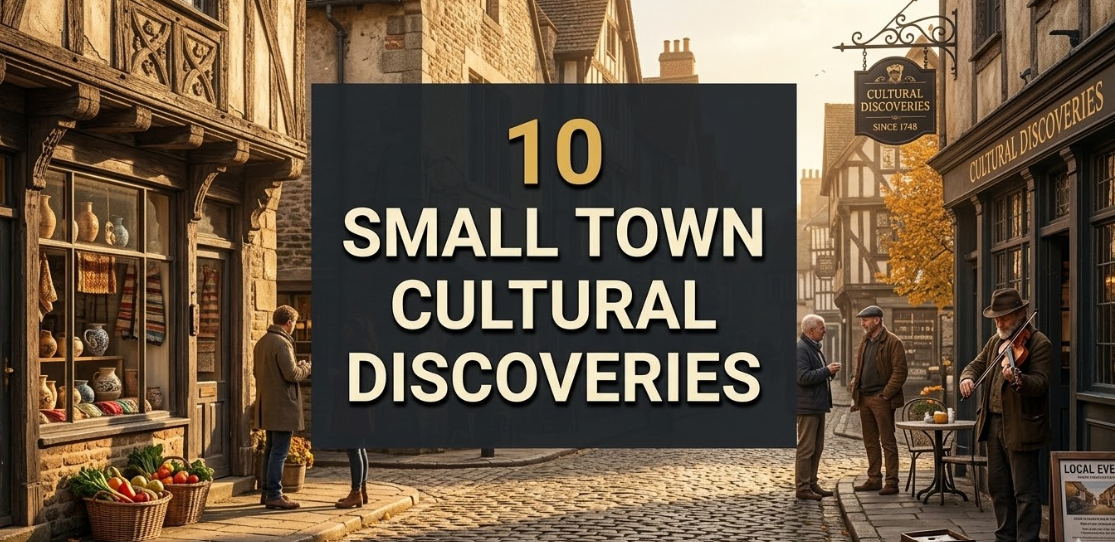
If you’re looking to escape tourist traps and canned experiences, this guide is for you. Here are 10 cultural small town discoveries that felt different — the ones that made you feel like you actually went somewhere real.
1. The Saturday Morning Farmers Market Powered by Community Pride
Most cities have farmers markets. But farmers markets in small towns are a whole other beast.
In towns such as Taos, New Mexico or Berea, Kentucky, these weekly events are not commercialized affairs. They’re cultural rituals.
You’ll meet third-generation honey merchants who can tell you the name of every customer. You’ll find hand-embroidered table linens next to jars of blackberry jam that someone made at 5 a.m. that morning.
What Makes It Feel Real
The vendors aren’t middlemen. They grew it, made it, or caught it. When you inquire about how the tomatoes were grown, you get a twenty-minute lecture on soil types and frost dates.
That conversation? That’s the real-deal cultural small town experience you drove four hours out for.
Pro tip: Go early. Before 9 a.m. is when you’ll find the best stuff — and the best talk.
2. A Main Street With Shops That Have Been Around for Generations
Chain stores have no soul. Small-town Main Streets often do.
When a hardware store has operated under the same family since 1938, walking through its door is like going into a time capsule. The shelves are somewhat chaotic. The owner’s cat is probably asleep by the register. And the prices are scrawled in marker on masking tape.
The Value of Staying Independent
These indie shops endure not because they are fashionable but because locals really need them and really love them. That relationship of a shop to a community is in itself a cultural artifact.
Look for:
- Used bookstores with the book margins scribbled upon by previous owners
- Sewing and fabric shops that also serve as neighborhood gathering places
- General stores that still carry penny candy
Each one is a portal into how an entire town lives.
3. Folk Festivals Nobody Outside the County Has Heard Of
Forget the big-name music festivals that charge $300 per ticket and reek of sunscreen and corporate sponsorship.
Small towns have folk festivals that have always happened the same weekend every year since before you were born. The Old Fiddlers’ Convention, in Galax, Virginia, has been running since 1935. In Elgin, Texas, the Hogeye Festival honors the town’s sausage-making history with dancing and music — and more sausage than you’ve ever laid eyes on.
Why These Festivals Feel Different
No one here is playing to the cameras. The dancers were taught by their grandparents. Musicians tune by ear in parking lots — because that’s what you do.
These are cultural small town discoveries that feel authentic because they were never intended for you — they were intended for the community. You just happened to be there.
| Festival Type | Example Town | What You’ll Find |
|---|---|---|
| Old-time music | Galax, VA | Fiddles, banjos, flat-foot dancing |
| Food heritage | Elgin, TX | Traditional recipes, local pride |
| Harvest festivals | Circleville, OH | Pumpkins, crafts, and parade |
| Seafood celebrations | Apalachicola, FL | Oyster shucking, local fishermen |
| Ethnic cultural | New Glarus, WI | Swiss heritage, yodeling, costumes |
4. Diners Where the Menu Hasn’t Changed Since 1974
There is a specific sort of breakfast that only exists in some small-town diners. The coffee is served in a white ceramic mug. The hash browns are a kind of crisp no chain restaurant will ever attain. And the waitress knows what you want before you even order it — because you’re the only new face she’s seen all week.
The Diner as Cultural Institution
It’s not just about food at a small-town diner. It’s where farmers discuss the weather before sunrise. It’s where the high school football team goes for pancakes after a Friday night win. It’s the social backbone of the entire community.
What to Order (and What to Ask)
When you sit down, inquire as to what is homemade. Almost always, it’s the pie. And almost always, it’s extraordinary.
Ask about local specialties too. In the Chesapeake Bay region, there are crab cakes made with recipes handed down through the generations. In the Appalachians, stack cakes filled with dried apple filling remain a thing. In the Southwest, green chile appears everywhere — even in the eggs.
The food itself is a cultural small town find worth making the rounds for every trip.
5. Historic Murals That Paint the Whole Story of a Town
Some towns have cracked the code: the walls can talk.
Paducah, Kentucky has revitalized its downtown with giant murals of river life and commerce from the 1800s. Chemainus, British Columbia has achieved international fame for its outdoor mural festival honoring the town’s logging history. Dothan, Alabama has peanut-themed art on every corner because it is the peanut capital of the world.
Reading a Mural Like a Local
A good community mural is not decoration. It’s a visual document. You can learn more about a town’s history, its heroes, its hardships, and its humor from a good mural than from many plaques or pamphlets.
Walk slowly. Check for faces — they usually depict actual people. Ask locals who the people in the murals were. That one question can set off a conversation that stretches an hour.
6. A Tiny Museum That Packs a Big Punch
Major museums are incredible. But they can also be overwhelming and impersonal.
A small-town museum with a part-time volunteer guide named Carl who’s been there for 70 years? That’s something else.
Why Small Museums Hit Harder
These places are built by people who care about particular stories. Not general history — their history. The artifacts are often donated by the families of people who actually used them. The photographs on the wall are of actual community members, not stock images generic to “the era.”
Standout small-town museums to consider:
- National Mustard Museum – Middleton, Wisconsin
- Barbed Wire Museum – La Crosse, Kansas
- Museum of Dirt – Boston (originally), now online and at events
- Cockroach Hall of Fame – Plano, Texas (quirky but actually funny)
- International Bluegrass Music Museum – Owensboro, Kentucky
Some are serious. Some are delightful. Each one is unmistakably theirs.
7. Live Music in Unexpected Places
Not a concert hall. Not a ticketed venue. Just a porch, a feed store, or the back room of a barbershop.
In small towns, musical traditions can be so deeply embedded that the music just spills out naturally. In the mountains of North Carolina, old-time fiddle music is still performed in general stores on Saturday afternoons. In the bayou towns of Louisiana, a Sunday evening might bring zydeco bursting from someone’s front yard.
The Spontaneity Is the Point
Planned concerts are fine. But finding a group of musicians who have been playing together for thirty years? That’s a cultural small town discovery you’ll tell people about for the rest of your life.
Keep your ears open. Follow the sound. Say yes when somebody waves you over to join the crowd.
According to the Smithsonian Center for Folklife and Cultural Heritage, living musical traditions in small communities are among the most endangered and most valuable cultural resources in America.
Towns Quietly Famous for Music
- Bristol, Tennessee/Virginia – Birthplace of country music, currently alive in its small venues
- Port Townsend, Washington – A jazz-obsessed coastal town with year-round jams
- Clarksdale, Mississippi – Delta blues, every single night
- Boone, North Carolina – Mountain string music in almost every public space
8. The Town Library With a Room Full of Local History
Most people bypass the library when they travel. That’s a mistake.
A small-town library often has a special collection that exists nowhere else — local newspapers going back 150 years, handwritten letters from soldiers in wartime, photographs of the town before the courthouse went up.
Why This Matters for Travelers
This is not the kind of content you’d find on Wikipedia. It is not in any travel guide. The librarian who curates the local history collection has likely spent twenty years assembling it and would be thrilled to walk someone through it.
Ask the librarian: “Do you have a local history room?”
The answer is almost always yes. And the conversation that follows is nearly always extraordinary.
9. Craft Breweries and Distilleries Made With Local Ingredients
The craft beverage revolution hasn’t only played out in cities. The best small-town breweries and distilleries are creating things that simply cannot exist anywhere else.
In Asheville, North Carolina, the craft beer scene started in the hills before it was widely celebrated. In Bardstown, Kentucky — “The Bourbon Capital of the World” — small distilleries still use grain grown on local farms.
What Sets These Apart From City Counterparts
They’re not trying to be trendy. They’re trying to be good. The barley was grown down the road. The water comes from a particular aquifer. The barrel wood was sourced from a local cooperage.
That specificity of ingredient translates to specificity of flavor. You taste the place when you drink it.
What to look for:
- Ask where the base ingredients are sourced from
- Ask how long the operation has been running
- Ask if they do tours — most small operations do, for free
10. The Kind of Neighbor-to-Neighbor Culture You Forgot Was Possible
This last one isn’t a place you visit. It’s something you notice.
In small towns with deep cultural ties, people still look after one another. When someone is sick, the neighbor brings food. The hardware store owner lets you run a tab. Your Sunday morning table is reserved for you at the diner.
Why This Is the Most Authentic Discovery of All
This tradition of mutual care is ancient. It predates tourism. It predates Instagram. It predates the whole notion of a “destination.”
As a visitor, when you witness that, it does something to you. It reminds you that this is how people were meant to live — in relationship with one another, in small and knowable communities.
That feeling? That’s the true cultural small town find. Everything else is merely the door you step through to discover it.
Before You Go: How to Find the Most Authentic Experiences
Not every small town provides genuine culture. Some have been hollowed out. Others have transformed themselves into theme parks for weekend tourists.
Here’s a quick table to help you tell the difference:
| Sign of Genuine Local Culture | Warning Sign of a Tourist Trap |
|---|---|
| Locals outnumber tourists on weekdays | Packed with visitors at the weekend |
| Long-standing family businesses dominate | Chains and pop-up shops everywhere |
| Events are primarily for residents, tourists welcome | Events organized and priced for outsiders |
| Locals recommend the same places tourists visit | Locals eat and shop elsewhere |
| Specific pride in local history | Generic “country charm” branding |
| Free or very affordable cultural activities | Admission fees for everything |
Use this as your filter before you book. Post in travel forums asking what the town is like on a random Tuesday. That answer tells you everything.
The Bigger Picture: Why These Discoveries Matter
Small towns across the United States — and elsewhere in the world — are battling for their existence. Young people leave. Stores close. The cultural fabric thins.
When travelers choose to visit these places, spend money at local shops, dine at family-owned restaurants, and attend community events, they are taking part in something meaningful.
They help keep it alive.
A cultural small town find is more than a good travel story. It is a vote for the kind of world you want to inhabit — one where local knowledge matters, history is honored, and community still counts.
Pack your bag. Leave the interstate. Turn down a road you’ve never been on before.
The best discoveries are the ones nobody put on a list.
FAQs About Cultural Small Town Discoveries
Q: What’s a good way to find an authentic small town worth visiting?
Find towns with robust arts councils, thriving farmers markets, and time-honored festivals. Steer clear of towns where the main attraction is outlet malls or chain restaurants. Cross-reference travel forums where locals field questions.
Q: When is a good time of year to experience small-town culture?
Late spring to early autumn tends to bring festivals, outdoor markets, and community events. But winter visits have their appeal too — smaller crowds, cozier vibes, and often the best chance to chat with locals who actually have time to talk.
Q: Are cultural experiences in small towns expensive?
Most are inexpensive or completely free. Farmers markets, festivals, murals, and live music in public spaces are all free to enjoy. Even tiny museums tend to charge $5 or so. Your largest expense will be the local food — well worth every penny.
Q: How do I connect with locals without being intrusive?
Start with questions, not observations. Ask where they’d recommend eating. Ask about local history. Small-town people are generally friendly and proud of their roots — they just need to know that your curiosity is genuine, not exhibitionism.
Q: What should I always do on a small-town cultural visit?
Show up on a weekday if you can. Get to the diner in the morning. Check in with the local library or historical society. Walk Main Street slowly. Skip the chain gas station and stop at the local one instead. Pay cash when possible — it goes further in a small economy.
Q: Can you have a meaningful small-town cultural experience in just one day?
Absolutely. With one day, focus on three things: the morning farmers market or a stroll along Main Street, a long lunch at a family-owned restaurant, and an afternoon at a local museum or cultural site. End with whatever music or evening activity the town has to offer. Done properly, one day leaves a lasting impression.