Travel & Nature Guide | Outdoor Getaways | Small Town Explorations
Imagine waking up to the sound of a river rushing just outside your window. The air is clean and cool. The trees are filled with song from birds. There’s no traffic noise. No crowds. No rush.
That is what small towns by lakes and rivers can provide. They are easy to overlook in favor of busy tourist destinations. But they offer a few of the most powerful nature experiences you will ever have.
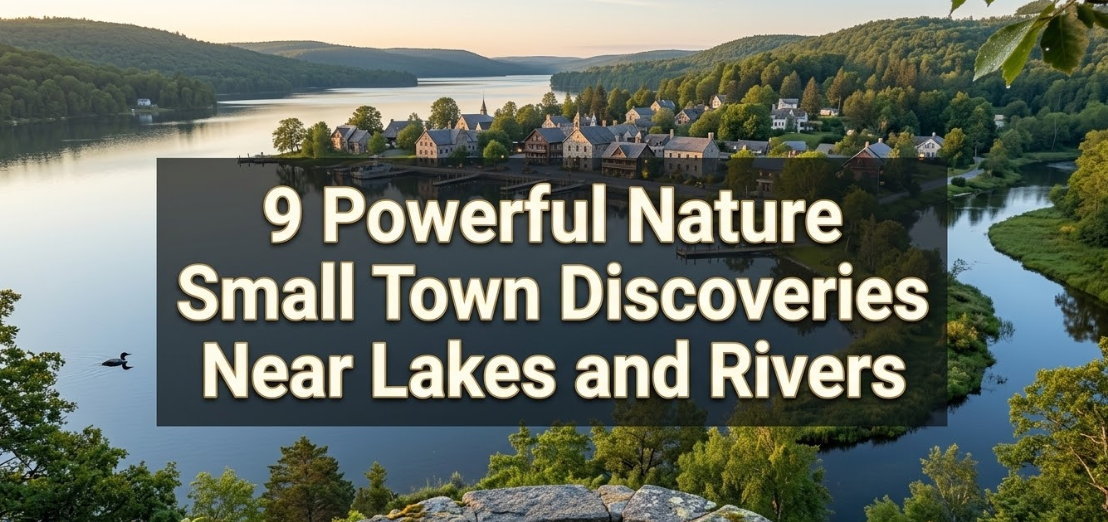
This guide explores 9 incredible nature small town finds along lakes and rivers. Whether you’re into hiking, kayaking, birdwatching or just sitting by the water — these places are calling your name.
Why Small Points of Water Are Nature’s Best Kept Secrets
73%
of travelers experience less stress in rural water-side towns
2x
more wildlife sightings compared to national park entrances
$60
average daily spend vs. $200+ in major tourist cities
How Are Nature Small Town Discoveries Different?
There’s something different about an edge-of-a-lake town or a wide-river town.
These are not theme-parkized places. The trails are real. The fish are actually biting. The sunsets don’t have a gift store.
Small towns near water tend to have:
- Fewer visitors — more room for you
- Welcoming residents who actually know the terrain
- Inexpensive places to eat, stay and visit
- Unspoiled ecosystems with native plants and wildlife
- Strong cultural connections associated with the river or lake
These are the types of places that stay with you after you’ve left. Here are nine of the best. For more hidden gems across the country, explore Small Town Discoveries — a dedicated guide to America’s most overlooked and rewarding small towns.
Discovery 01
Leavenworth, Wash. — Where a River Flows Through an Alpine Dream
Leavenworth is located right next to the Wenatchee River in Washington State. It appears to be a Bavarian village ripped from the pages of a storybook. But underlying the charming buildings is a vibrant outdoor scene.
What You’ll Find Here
The river is the centerpiece. In spring and early summer, it swells with snowmelt and becomes one of the finest whitewater rafting rivers in the Pacific Northwest. It caters to beginners as well as experienced paddlers.
Hiking trails slice through the nearby Cascades. The Enchantments area is a quick drive away — a wilderness of alpine lakes and craggy peaks that comes off as practically otherworldly.
In the autumn, the hillsides turn gold and red. In the winter months, birdwatchers spot bald eagles hunting along the river. Every season brings something new.
Best Time to Visit
Late spring for rafting. Late September and October for foliage. Winter for the popular Christmas lights festival.
Discovery 02
Bayfield, Wis. — Gateway to the Island Wilderness of Lake Superior
Bayfield is a small fishing town on the southwestern shore of Lake Superior. It is home to about 480 people — but what it lacks in size, it makes up for with natural magnificence.
Sea Caves and Sandstone Cliffs
Just offshore lie the Apostle Islands — 21 islands dotted with sea caves etched into red and brown sandstone. You can paddle right up to them in your kayak when the weather is calm.
In the winter, when the lake freezes over, these caves turn into walls of ice. People walk out across the frozen lake to visit them. It is among the most beautiful natural phenomena in the American Midwest — and hardly anyone outside that region knows it even happens.
More Than the Lake
Bayfield is surrounded by berry farms and orchards. Nearby forests are packed with hiking and mountain biking trails. Fishing charters go out for lake trout and salmon. And fall in Bayfield is like walking through a painting.
Quick Season Guide: Top Things to Do by Time of Year
| Season | Best Activities | Top Location Type | Crowd Level |
|---|---|---|---|
| Spring | Whitewater rafting, birdwatching | River towns | Low |
| Summer | Swimming, kayaking, fishing | Lake towns | Moderate |
| Fall | Leaf-peeping, hiking, harvest festivals | Both | Low–Mod |
| Winter | Ice caves, snowshoeing, stargazing | Northern lake towns | Very Low |
Discovery 03
Hot Springs, Ark. — A River Valley Town With a Deep Connection to Nature
Hot Springs sits in a valley nestled among the Ouachita Mountains, within minutes of Lake Catherine and the Ouachita River. The town itself grew to be known for its natural thermal springs — water that naturally rises out of the ground at about 143°F (62°C).
Bathing in History and Nature
The Bathhouse Row along Central Avenue is a National Register of Historic Places site. The original bathhouses remain in use, allowing visitors to experience the thermal waters as people did more than a century ago.
Lakes, Trails, and Wildlife
Lake Ouachita, one of the clearest lakes in the United States, sits nearby. Its waters are so blue and pristine that underwater visibility can exceed 15 feet. It is also unusual for a freshwater lake in that scuba diving is popular here.
The Ouachita National Forest surrounds the area. Hikers, mountain bikers and horseback riders all have room to roam over hundreds of miles of trails.
Discovery 04
Elk, California — A Clifftop Village Over the Pacific
Elk is small — fewer than 300 people live there. It rests on cliffs above the Pacific Ocean along the Mendocino coast, at the mouth of the Garcia River.
Where the River Meets the Sea
The Garcia River estuary is a diverse habitat. Harbor seals haul out on the rocks. Shorebirds probe the mudflats. Steelhead trout run the river in winter. This is an area where several ecosystems intersect in a tiny geographic area.
The bluffs provide some superb perspectives of sea stacks — tall rock formations that extend out of the ocean. Watching the sun set behind them in the evening is something you won’t forget easily.
Redwoods Within Reach
A short drive inland leads you to coastal redwood forests. These trees may reach over 300 feet in height. You feel a deep sense of humility walking beneath them. The Hendy Woods State Park is a local favorite.
9 Small Town Discoveries at a Glance
| # | Town | Water Feature | Top Draw | Best For |
|---|---|---|---|---|
| 1 | Leavenworth, WA | Wenatchee River | Whitewater rafting | Adventure seekers |
| 2 | Bayfield, WI | Lake Superior | Sea caves / ice caves | Explorers |
| 3 | Hot Springs, AR | Lake Ouachita | Thermal springs + clear lake | Wellness + divers |
| 4 | Elk, CA | Garcia River / Pacific | Sea stacks + redwoods | Wildlife lovers |
| 5 | Brevard, NC | French Broad River | Waterfalls + white squirrels | Hikers + families |
| 6 | Ely, MN | BWCA chain of lakes | Canoe wilderness | Paddlers + campers |
| 7 | Lander, WY | Popo Agie River | Sink & Rise phenomenon | Geology fans |
| 8 | McCall, ID | Payette Lake | Crystal lake + winter sports | All-season visitors |
| 9 | Fayetteville, WV | New River | Ancient river + gorge | History + adventure |
Discovery 05
Brevard, N.C. — The Waterfall Capital of the East
Brevard is located in the Blue Ridge Mountains, at the edge of the headwaters of the French Broad River. It’s small and quiet — but the surrounding nature is far from ordinary.
More Waterfalls Than You Can Count
Brevard is surrounded by the Pisgah National Forest. Over 250 named waterfalls are within a short drive. Some are towering cascades. Others are broad, smooth rock slides where on summer afternoons children frolic in the slack water.
Looking Glass Falls is one of the state’s most-photographed. Water plunges 60 feet into a crystal-clear pool. A brief stroll from a parking lot makes it approachable to nearly all.
The White Squirrels
Brevard is also known for something utterly surprising — white squirrels. The town is home to a local population of albino and leucistic squirrels living in the parks. They’ve become a beloved symbol. In May, the town hosts an annual White Squirrel Festival.
It’s the sort of quirky, nature-oriented detail that only a small town can pull off.
Discovery 06
Ely, Minn. — Paddling Into Real Wilderness
Ely is the gateway to the Boundary Waters Canoe Area Wilderness (BWCA) — more than one million acres of lakes, rivers and forests that motorized vehicles are not permitted in.
A Canoe Paradise, the Way It Was Meant to Be
The BWCA holds over 1,100 lakes linked by brief portage trails. Between water bodies, paddlers portage canoes. You can travel for days without encountering a road or a building. The only noises here are water, wind and the haunting call of loons.
This is what wilderness really means — not a park where nature is put on display, but a place you step inside of nature’s world on its terms.
Wolves, Moose, and Northern Lights
Ely hosts the International Wolf Center — one of only a few establishments in the world where visitors can learn about wild wolves and see them up close. Gray wolves patrol the woods surrounding town, and moose are commonly spotted along roadsides.
The skies above Ely clear in the winter to reveal spectacular Northern Lights. Scant light pollution in this far-flung corner of Minnesota offers some of the best aurora viewing in the lower 48 states.
Did You Know? The Boundary Waters Canoe Area Wilderness sees about 150,000 visitors annually — versus Yellowstone’s 4+ million. That translates to more peace, more wildlife and more room for you to breathe.
Discovery 07
Lander, Wyoming — Where the River Goes Underground
Lander is a small western town at the foot of the Wind River Mountains on the Popo Agie River. In the climbing world, it’s known as one of North America’s best rock climbing destinations. But the nature discovery here that most wows visitors is much stranger.
The Sink and the Rise
Just outside of town at Sinks Canyon State Park, the Popo Agie River does something extraordinary. It runs into a cave in a limestone cliff — and then vanishes completely. A quarter mile later, the same water emerges from another break in the rock, called “The Rise.”
Scientists have dyed the water to track it. What’s remarkable is that it takes two full hours for the water to travel that short distance underground. Nobody really knows what becomes of it inside the mountain.
Trout That Have No Fear
At The Rise, huge brown and rainbow trout glide in a serene pool beside the cave entrance. Because no one fishes here, the fish are not afraid of humans. You can stand at the water’s edge and watch trout the size of your arm swim slowly within arm’s reach.
Discovery 08
McCall, Idaho — A Four-Season Mountain Lake Town
Payette Lake sits at the center of McCall, a small resort town in north-central Idaho. The lake is deep, cold and blindingly blue — the kind of blue that compels you to jump in at once.
Summer on the Lake
Downtown McCall is right on the lake. On summer mornings before the afternoon wind kicks in, paddleboards, kayaks and canoes crowd the water. Swimming is excellent, particularly in the northern end where the water is slightly warmer.
The town is enveloped by the Payette National Forest. Hiking and mountain biking trails branch in every direction. Scattered throughout the backcountry are hot springs — some only accessible on foot after a full day’s hiking.
Winter Festival Magic
McCall’s Winter Carnival is one of Idaho’s oldest winter festivals. Each February, giant snow sculptures dot the whole town. The lake freezes and people skate, ice fish and sled on its surface. It’s a local tradition that seems to transport you into another era.
Discovery 09
Fayetteville, W.Va. — Standing on the Brink of Geological Time
Fayetteville balances on the lip of the New River Gorge. The New River is, despite its name, one of the oldest rivers in North America — perhaps 300 million years old. The gorge it created is spectacular: almost 1,000 feet deep in places, with the iconic New River Gorge Bridge spanning its chasm.
America’s 59th National Park — and One of Its Newest
The New River Gorge was officially designated as a National Park in December 2020. But long before that, locals knew it as one of the best kept outdoor secrets in the eastern United States.
The river itself provides world-class whitewater rafting, particularly through the lower gorge where the rapids reach Class IV and Class V. The surrounding forest conceals historic coal mining ruins, adding layers of human history to the natural beauty.
Climbing and Bridge Day
The sheer sandstone walls of the gorge have put Fayetteville on the map for rock climbers. There are more than 1,400 climbing routes documented here — from beginner to expert.
On Bridge Day, the New River Gorge Bridge is closed to traffic once a year. Thousands congregate to rappel off it, parachute from it, and celebrate the gorge below. It is one of the most unusual outdoor events in the nation.
How to Plan Your Nature Small Town Discovery Trip
These nine towns are spread across the country, so you wouldn’t hit all of them in one trip. Here’s how to choose the best one for you.
Step 1 — Find a Water Body That Matches Your Interests
Do you love paddling? Head to Ely or Leavenworth. Prefer swimming in crystal-clear water? McCall or Hot Springs will do. Want dramatic ocean-meets-river scenery? Elk, California is your answer.
Step 2 — Choose the Right Season
All of these towns have a peak season — but several attract year-round visitors. Bayfield is magical in winter. Spring waterfall season is beautiful in Brevard. Lander is at its best in summer when climbing is dry and warm.
Seasonal Visit Planner
Spring (Mar–May)
Best for: waterfalls, rafting, birdwatching. Try Brevard, NC or Leavenworth, WA.
Summer (Jun–Aug)
Best for: lakes, paddling, hiking. Try McCall, ID or Ely, MN.
Fall (Sep–Nov)
Best for: foliage, brisker hikes, fishing. Try Fayetteville, WV or Hot Springs, AR.
Winter (Dec–Feb)
Best for: ice caves, northern lights, snow festivals. Try Bayfield, WI or McCall, ID.
Step 3 — Go Light, Stay Local
The best way to experience these towns is at a crawl. Book a room at a local inn rather than a chain hotel. Dine where the river guides eat. Ask the person behind the counter which are the real trails — not the ones on the tourist map.
These towns thrive when visitors spend money locally. And the payoffs are real: insider knowledge, under-the-radar gems and experiences that no commercial tour can offer you.
What to Bring for a Nature Small Town River or Lake Getaway
| Category | Essential Items | Why You Need It |
|---|---|---|
| Water equipment | Quick-dry clothing, water shoes, dry bag | Kayaking, wading in rivers and unexpected splashes |
| Hiking | Trail shoes, trekking poles, headlamp | Uneven terrain, early morning starts |
| Wildlife watching | Binoculars, field guide, camera with zoom | For birds, bears, moose or eagles |
| Safety items | First aid kit, bear spray (where relevant), map | Remote trails where cell service is limited |
| Comfort items | Layers, rain jacket, sun protection | Mountain weather changes really quickly |
Frequently Asked Questions
What makes small towns by a lake or river good for nature walks?
Small towns near water tend to have less visitation, more plentiful wildlife and intact natural ecosystems. You are not sharing a view with thousands of tourists. The land itself tends to be undeveloped, and locals will guide you to places that never appear on popular travel websites.
Would these nature small town discoveries be suitable for families with children?
Yes, quite a few of them are superb for families. The waterfalls of Brevard, lake beaches of McCall and thermal baths in Hot Springs are all kid-friendly. Lander’s Sinks Canyon has gentle trails, and trout watching at The Rise is a surefire hit with kids of all ages.
Do I need special permits to visit places like the Boundary Waters near Ely, Minnesota?
Yes. The Boundary Waters Canoe Area Wilderness requires an entry permit, particularly during the summer peak season from May to September. Permits can be reserved in advance through the US Forest Service’s recreation reservation system. Daily entry numbers are capped to preserve the wilderness.
When is the most inexpensive time of year to visit these little river and lake towns?
The shoulder seasons — spring (April–May) and fall (September–October) — are best for a combination of low prices and lovely conditions. Fewer crowds, accommodations are more affordable and nature is often at its most majestic during these times.
Is whitewater rafting in towns like Leavenworth or Fayetteville possible for beginners?
Absolutely. Guided rafting trips are rated for all levels of experience. In Leavenworth, the Wenatchee River has sections good for beginners. The New River near Fayetteville likewise includes upper gorge sections that are ideal for first timers, before you take on the lower rapids.
Is it possible to visit these towns without a car?
Most of these small towns are best accessed by car, notably once you arrive and decide to explore trails and water access points surrounding your accommodations. Only some towns, such as Hot Springs in Arkansas, have a limited number of bus connections from bigger cities. A rental car is strongly recommended for the best experience.
What kind of wildlife am I really likely to see in these small town nature areas?
It depends on where you are and what time of year it is. Near the Boundary Waters you might spot moose, black bears, wolves, loons and bald eagles. In the Appalachian region near Brevard and Fayetteville, keep your eyes peeled for black bears, white-tailed deer, wild turkeys and dozens of songbird species. Coastal towns like Elk, California offer harbor seals, otters and shorebirds.
The Final Word: Deviate From the Beaten Path
The most fulfilling travel experiences often don’t occur in the most famous locales. They occur when you slow down. When you decide to drive down a gravel road because a local told you the view was worth it. When you wake up early, and the lake is quiet, and the whole world feels peaceful.
These nature small town discoveries alongside lakes and rivers provide just that experience. They’re not overrun. They’re not staged. They’re real.
Whether you’re pursuing waterfalls in North Carolina, paddling through the Minnesota wilderness or watching the sun dip behind a frozen lake in Wisconsin — these places will remind you why the natural world is worth protecting, visiting and celebrating.
Pick one. Pack light. Show up with curiosity. You won’t be disappointed.