
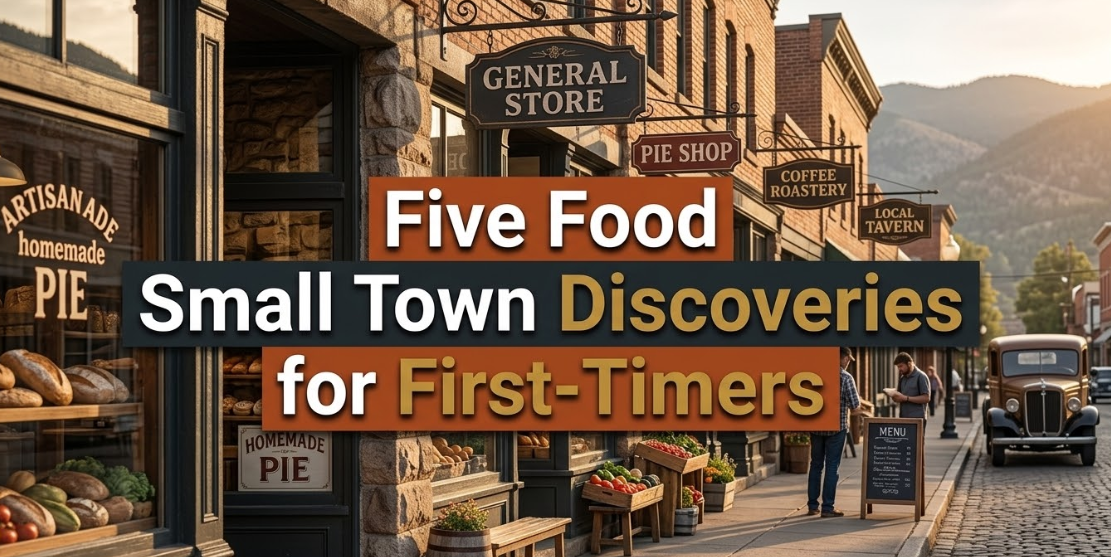
There’s a kind of magic to turning off a highway into a small town and smelling fresh pie through an open window.
You did not plan it. You did not Google it. It just happened.
And that, exactly, is what makes small town food adventures so special. Small towns are home to some of the best food in the country — not behind fancy menus or Instagram-famous chefs, but in cozy diners, roadside stands and family-run bakeries that have been feeding neighbors for decades.
This guide will help you discover five foods to find as a first-time visitor in any small town in America. If you’re out on a weekend road trip or a more marathon trek, these stops will fill your stomach and create an unforgettable memory.
Why The Food Hits Different In Small Towns
Big city restaurants are great. But small town food has a quality that no city place can imitate — soul.
When it’s a woman named Doris who has been making those biscuits every morning for 35 years, they taste different. Those tomatoes are different when a farmer drives them just two miles to a roadside stand.
Small towns lean on each other for support. The food is personal. The portions are generous. The prices are kind. And the people who work behind the counter almost always know your order before you’ve even finished saying it — even if it’s your first time there.
What First-Time Visitors Usually Miss
The majority of visitors go only to what appears to be “safe.” They stop at chain restaurants on the highway. They scroll through apps, then click only on places that have hundreds of reviews.
Big mistake.
The best small town food is a hushed affair. It does not advertise. It does not need to. Locals just know. As a visitor, your task is to slow down, look around and follow your nose.
Discovery #1 — The Classic Small Town Diner
Every small town has one. Usually on the main street. Almost always open since the 1950s or ’60s. A neon sign in the window. Coffee brewed since 4 a.m.
For true local flavor, the small town diner is Ground Zero.
What to Order at a Small Town Diner
Do not overthink it. Trust the fundamentals — they’ve been doing it longer than you have been alive.
- Breakfast platters — eggs, bacon, hash browns, toast. Simple, fresh, and enormous.
- The daily special — usually scrawled on a chalkboard. This is what the cook made with whatever was freshest that morning.
- Homemade pie — cherry, apple, pecan or peach. If there’s a glass display case next to the register, you are in business.
- Biscuits and gravy — a Midwest and Southern mainstay. Thick white sausage gravy ladled over fluffy biscuits. It is a meal, not a side.
How to Spot a Good One
Check for cars in the parking lot before 7 a.m. Check for older pickup trucks. And if local farmers eat there, you know you hit the jackpot.
If possible, sit at the counter. The person on that stool next to you has probably eaten here three times this week. Ask what they recommend.
Tip: Don’t even look at the laminated menu — ask what’s made fresh that day. Diners rarely say no.
Discovery #2 — Farm Stands and Roadside Produce Vendors
You encounter them along country roads. A wooden table. A hand-painted sign. Perhaps a jar with a slot for cash and an honor system going strong.
These roadside farm stands are a small town food treasure that most visitors whip by without so much as a second thought.
Stop. Seriously, stop.
Depending on the season and region, you may encounter:
- Corn so fresh it was picked that morning — just boil and slather with butter
- Heirloom tomatoes in colors and shapes never seen in a grocery store
- Peaches, strawberries, blueberries or apples depending on the season
- Homemade jams, jellies and preserves made from the same fruit growing behind their house
- Fresh eggs from chickens that can sometimes be seen in the yard behind the stand
- Honey produced by local bees — and it tastes nothing like supermarket varieties
The Honor System and Why It Matters
A lot of farm stands operate on the honor system. The owner isn’t always there. There’s a price list, a scale and a cash box.
This is not naïve. It is community. In a small town, everybody knows everybody. You don’t cheat the farm stand any more than you steal from your neighbor’s yard.
As a visitor, participating with honesty is a genuinely good feeling. Pay what is listed. Leave a little extra if the produce is exceptional. You just became part of the community for five minutes.
The Best Seasons to Stop
| Season | What to Look For |
|---|---|
| Spring | Asparagus, early strawberries, fresh herbs |
| Summer | Corn, tomatoes, peaches, zucchini |
| Fall | Apples, pumpkins, squash, pears |
| Winter | Root vegetables, preserved jams, dried goods |
Discovery #3 — The Hidden Small Town Bakery
Not every small town has a bakery you can locate on a map. Some are hidden away in gas stations. Some share a building with the post office. Some are simply a home kitchen with a hand-lettered sign on the door three days a week.
These are the best ones.
Why Small Town Bakeries Are Unbeatable
No small town baker is trying to scale. They aren’t baking 10,000 croissants a day. They’re baking 40 loaves of sourdough with their own starter, which they’ve nurtured for years.
And the difference shows up in every bite.
You will often find:
- Sourdough and whole grain loaves made with local flour
- Sweet rolls and cinnamon buns that would embarrass chain bakeries
- Seasonal pies made with fruit from local farms
- Old-country recipes brought over by immigrant families generations ago
- Things you can’t quite name but still want seconds of
When to Show Up
Get there early. Not “before lunch” early. Like 7 a.m. early.
Small town bakeries sell out. When the bread is gone, it’s gone. Arriving at 11 a.m. might leave you with the last loaf of rye and nothing more.
Some take orders only the day before. If you are spending the night in a small town, ask your innkeeper or hotel desk about local bakeries, and whether they take orders over the phone.
Traveler Tip: If there’s a line outside a bakery in a small town, get in it without asking what they sell. A line means something.
Discovery #4 — Small Town Food Festivals and Weekly Markets
Food is a cause for celebration in small towns. And they do it with authentic enthusiasm — not for tourists, but for themselves.
One of the best surprises a first-time visitor can experience is stumbling upon a local food festival or weekly farmers market.
What Happens at These Events
A small town food festival might be centered around a single thing:
- A chili cook-off where the town’s finest cooks compete and you eat for nearly nothing
- A June strawberry festival with homemade shortcake, jam and fresh-dipped chocolate berries
- A BBQ contest that brings pitmasters from three counties over
- A fall harvest fair featuring cider pressing, apple butter and roasted corn
Weekly farmers markets are a slightly different thing. They are quieter, more routine — and often packed with vendors selling things you can’t find anywhere else: specialty mushrooms, artisan cheese, cured meats, homemade hot sauce and freshly cut flowers.
How to Find These Events
That’s where a bit of old-fashioned research comes in handy. Before your trip:
- Check the local town Facebook group or community website
- Look at the county fair calendar — most are posted months in advance
- Ask at the gas station, diner and every shop on Main Street
- Look for flyers taped in windows — small towns still use flyers
Even if you’re just passing through, a Saturday morning market stop takes 30 minutes and costs almost nothing. But it tells you more about a town than any guidebook ever could.
For a deeper look at what small towns across America have to offer visitors, Small Town Discoveries is a great resource to browse before your next road trip.
Discovery #5 — Ethnic and Regional Food Spots You Didn’t Know Were There
Here is something that surprises almost every first-time visitor to a small town: the food isn’t always what you expect from the region.
That quiet Iowa town may have a beloved Vietnamese restaurant. That little Texas crossroads might have a Mexican taqueria run by the same family for four decades. That small Pennsylvania town might have a German deli that still makes sausages from scratch on Fridays.
America’s small towns have been shaped by waves of immigrants, migrant workers and families who brought their home cooking with them — and never left.
The Stories Behind the Food
Every one of these spots has a story. A family that moved to a town because of a factory there. A woman who began selling tamales out of her kitchen to make ends meet. A Vietnamese refugee family that opened a pho restaurant and gradually won over the whole county.
These are not gimmicks. They are real people, real histories and real food.
The flavors are often more authentic than anything you’ll eat in a city, since these cooks are not adjusting for a mainstream audience. They are cooking primarily for their own community.
How to Find These Hidden Spots
This requires some effort — but not a lot.
- Drive down side streets off the main drag. Ethnic and regional spots are rarely found on prime real estate.
- Look for hand-painted window signs in languages other than English.
- Ask at the diner or bakery: “Is there anywhere really different to eat around here?”
- Check the local church bulletin board — many small communities advertise through their religious center.
- Look for a lunch crowd. If workers are lined up outside a small taqueria at noon, that’s your cue.
Regional Food Discoveries Worth Chasing by Area
| Region | What to Look For |
|---|---|
| Deep South | Soul food kitchens, fish fries, boiled peanut stands |
| Appalachia | Pinto beans and cornbread, pawpaw desserts, ramp dishes |
| Texas Hill Country | German and Czech bakeries, kolaches, smoked brisket joints |
| Upper Midwest | Scandinavian lefse stands, Polish delis, pasties in mining towns |
| Pacific Northwest | Filipino family restaurants, Hmong farm stands, Japanese izakayas |
| New England | Portuguese seafood, Italian pastry shops, maple everything |
5 Smart Tips to Make the Most of Small Town Food
Having an idea of what to look for, here are five practical tips to ensure you actually find these places when you go.
1. Talk to the person at the gas station. They know every spot in town. Ask: “Where do locals actually eat?” In less than 10 seconds, you will get a real answer.
2. Eat breakfast before you explore. The diner is quieter early. With coffee in hand, locals are more talkative. You get the best conversation and the freshest food in a single trip.
3. Carry cash. Many small town food establishments — particularly farm stands and small bakeries — don’t accept cards. Bring small bills. It also speeds up and humanizes transactions.
4. Don’t fear the lunch counter. Sitting alone at a small town lunch counter is one of life’s great simple pleasures. People talk to you. You learn things. You leave not just with your belly full.
5. Buy a jar of something to take home. Farm stand jam. Local honey. Homemade hot sauce. Those little jars are the best souvenirs. They cost next to nothing and every time you open one, you’re back in that town for a moment.
What Makes Small Town Food Visits Unforgettable
There’s a reason people talk about that little pie shop in the middle of nowhere for the rest of their lives.
It is not just the food. It is the feeling.
When you eat at a small town diner, you are not a customer. You are a guest. The cook knows the farmer who grew those potatoes. The waitress has been refilling coffee cups since long before smartphones existed. The pie came out of the oven an hour ago.
That soil-to-plate connection is something the food industry has spent decades trying to replicate in cities. In small towns, it simply… exists.
No Yelp review captures it. No food blog fully tells the story. You have to sit down, order the special and experience it yourself.
According to Bon Appétit, some of the most memorable and authentic meals in America are found not in big cities, but in small towns where recipes, traditions and community have stayed intact for generations.
The Local Economic Ripple Effect
When you eat at a small town restaurant, your money stays in the community. The restaurant sources from local farms. The baker orders flour from the regional mill. The jam maker picks from the orchard down the road.
This is not feel-good thinking. It is economics. A dollar spent at a local small town food business recirculates in the community at nearly twice the rate of a dollar spent at a chain.
So that breakfast at that diner is not just breakfast. It is part of a whole living ecosystem of people, land and tradition.
Frequently Asked Questions About Food Small Town Discoveries
Q: How can I find the best food in a small town with no online reviews?
The right approach is to ask people — not apps. Gas station attendants, innkeepers and people walking a dog are your best resources. Look for small restaurants with busy parking lots during mealtimes. A lot of pickup trucks at 7 a.m. is a five-star review.
Q: Are small town restaurants safe for people with food allergies?
Always alert staff upfront and directly. Small town cooks often cook to order, so they know exactly what goes into each dish and are usually happy to accommodate. Be clear and polite, and most will try their best to assist.
Q: What if I visit a small town and everything is closed?
Unusual hours are the reality for many small town food spots — bakeries and farm stands especially. Some close on Mondays. Some only operate on weekends. If you can, research ahead of time. Otherwise, be flexible. The best advice: if you see something open, stop. Do not assume you will catch it on the way back.
Q: Is food in small towns typically affordable?
Yes — often well more affordable than similar meals in cities. A full breakfast at a small town diner usually sits around $8–$12. Produce at farm stands is typically cheaper than grocery store prices. An artisan loaf from a small bakery may cost a little more than a grocery store loaf, but is far superior in quality and freshness.
Q: Are there vegetarian or vegan options available in small towns?
This depends on the region. Farm stands and farmers markets are great sources for fresh vegetables and plant-based products. Many ethnic restaurants have naturally vegetarian dishes. Some diners are adapting, though traditional small town diners tend to be meat-focused. When uncertain, check before you visit or call ahead.
Q: What is the best season to explore small town food?
Late summer and early fall are the richest seasons for small town food discovery. Farm stands are overflowing. County fairs and harvest festivals are in full swing. Bakeries are making seasonal pies. Every region has a “peak food” season — in apple country it’s October. In the South, it’s late spring for strawberries. Research your region’s harvest calendar before you travel.
Q: Are food small town experiences better than visiting touristy food destinations?
In most cases, yes — especially for authenticity and value. Tourist food is designed for tourists. Small town food exists for residents. That difference produces food that is more real, more personal and often more delicious. The experience also comes without the inflated prices that tourist zones carry.
Your Small Town Food Adventure Starts Now
You don’t need a reservation. You do not need a food tour guide. You don’t need a reservation app or a travel magazine’s curated list.
You just have to slow down, get off the highway and pay attention.
The five food small town discoveries in this guide — the diner, the farm stand, the hidden bakery, the local food festival and the unexpected ethnic or regional gem — are waiting in almost every small town across America.
Some are well-known within their communities. Most are invisible to outsiders.
Your only job is to show up, ask questions and eat.
The best meal you’ve ever had might be hiding behind a hand-painted sign on a gravel road you almost didn’t take.