
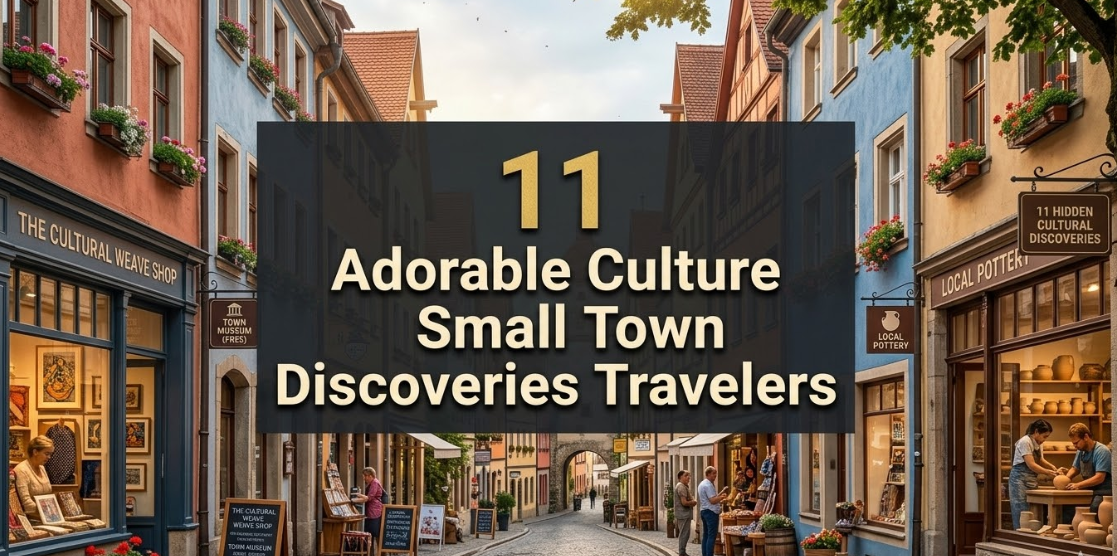
Large cities get all the news attention. Yet some of travel’s most potent experiences unfold in places you can traverse from tip to tail in 20 minutes. These are the towns where traditions have a pulse, where locals know your name by lunch and every street corner is chapter and verse.
Why the Boom in Small-Town Culture Travel
72%
of travelers maintain that small towns are more “authentic” than big cities
3×
increase in searches for rural tourism since 2020
$1,400
local spending-per-visitor average, cultural small towns
61%
of millennials prefer off-the-beaten-path destinations
What’s inside this guide
- 11 small-town cultural discoveries — the complete list
- What qualifies a town to be “cultural”?
- How to plan your small town culture trip
- Best times to visit
- FAQs
Why Culture Small Towns Are a Whole Other Thing
A normal tourist destination cannot do that. It is the scent of newly baked bread from a century-old bakery. It’s a folk musician down in the town square at noon just because he loves it. It is the local museum operated entirely by volunteers who will tell you where every artifact came from.
While mass tourism obliterates, culture small towns give what remains: intimacy. You’re not a guest in an amusement park. You are a visitor in someone’s living community.
Travelers who visit such sites report feeling more connected, inspired and rested than after any resort vacation. That is not an accident. That is the power of authentic culture.
“The best souvenir you can take home from a small town is a story, one you were actually involved in, not just the story of a still image.”
11 Culture Small Town Discoveries Travelers Keep Raving About
These towns were selected for their living cultural traditions, traveler reviews, community uniqueness and the sort of experiences that stick with you for years. Let’s dig in.
Arts & Craft
1. Taos, New Mexico, USA
Southwest USA
Adobe architecture, a UNESCO World Heritage pueblo and a vibrant arts scene that has drawn painters and sculptors for more than a century.
Festival Culture
2. Oaxaca de Juárez, Mexico
Southern Mexico
Land of mole, mezcal and the world’s most legendary Día de los Muertos celebrations. A classroom alive with pre-Hispanic tradition.
Heritage
3. Hoi An, Vietnam
Central Vietnam
A UNESCO-listed Ancient Town where the Japanese merchant houses, Chinese assembly halls and French colonial buildings coexist on the same lantern-lit street.
Music & Dance
4. Buñol, Spain
Valencia Region
Known the world over for La Tomatina, but stick around after the festival and discover deep Valencian folk music, pottery and fiesta culture that predates any tourism.
Culinary Culture
5. Monforte d’Alba, Italy
Piedmont, Italy
This small village, set in the Langhe wine hills, is a treasure vault of Barolo, truffle festivals and slow-food philosophy at its finest.
Indigenous Culture
6. Chefchaouen, Morocco
Rif Mountains
The “Blue City” is more than an Instagram backdrop. Its Berber and Andalusian musical heritage is deep, and its weavers and leather artisans are legendary.
Living Tradition
7. Luang Prabang, Laos
Northern Laos
Every morning — a 600-year-old ritual that has not been broken even once — monks in saffron robes walk the streets at dawn collecting alms.
Nordic Folk
8. Røros, Norway
Central Norway
A UNESCO-listed mining town with preserved 17th-century wooden architecture, Sami cultural connections and a winter market that dates back to 1644.
Textile Heritage
9. Otavalo, Ecuador
Andes, Ecuador
The Otavalo indigenous market is the biggest in South America. The textiles, music and community pride here are not performed — they are lived every day.
Sacred Architecture
10. Jiufen, Taiwan
New Taipei City
Perched on a mountain above the sea, this former gold-mining village made an impression on Studio Ghibli and stepping into it feels like entering a living painting, one with tea houses in the clouds.
Literary Culture
11. Hay-on-Wye, Wales, UK
Welsh Borders
A town of only 1,500 people that hosts a world-famous literary festival. It has the highest number of bookshops per capita in the world. Books here are culture.
Take a Closer Look at Five Fan Favorites
Each of these towns merits a stand-alone visit. But these five keep popping up when travelers share what they felt were their most memorable culture small town experiences. For more destinations like these, browse the full collection at Small Town Discoveries — a dedicated guide to the world’s most rewarding small-town travel.
Hoi An, Vietnam — A Place Where Time Is Meant to Move Slowly
Hoi An is not pretending to be modern. That is exactly its magic. The Ancient Town area prohibits motorbikes after dark. Lanterns light up the Thu Bon River. Tailors measure you by hand in shops older than most Western universities.
But the culture runs deeper than what you see. Hoi An is one of the best-preserved examples of a Southeast Asian trading port from the 15th to 19th centuries. Never before or since has Chinese, Japanese and Vietnamese culture fused here as it did. You can taste it in the food, see it in the architecture and hear it through music at the communal halls.
Visit the Japanese Covered Bridge. Eat a bowl of Cao Lau, which no one anywhere else in the world can cook because it must be made with water drawn from one local well. Take a lantern-making class. These are not gimmicks for you as a tourist — they are skills nurtured with life and passed on from generation to generation.
Luang Prabang, Laos — Where 600-Year Rituals Kick-Start Your Day
Get up at 5:30 AM, go outside. Hundreds of barefooted monks silently walk through misty streets collecting rice and food offerings from kneeling locals. This is Tak Bat, the almsgiving ceremony, and it has taken place here every single morning for over six centuries.
The rest of the town complements this spiritual energy. In a town of mere 25,000 people there are over 30 temples. Handmade Hmong textiles are sold at the night market. The sunsets are framed by the Mekong River. Luang Prabang was named a UNESCO World Heritage Site in 1995, not just for its buildings, but its living culture.
If you had to choose one culture small town in Asia, dozens of people who have been there say this is it.
Taos, New Mexico — Indigenous and Bohemian Cultures Unite
For more than 100 years, Taos has been a wellspring of creativity. Georgia O’Keeffe painted near here. D.H. Lawrence wrote here. Ansel Adams photographed it. Through all of them, however, the real culture is a millennium older.
Taos Pueblo is the oldest continuously inhabited community in North America. The Taos Pueblo people have lived there for more than 1,000 years and continue to do so today. There’s a guided tour you can take and, respectfully, you experience a living culture that has endured colonization, conflict and centuries of change.
The town itself has layered on top of this indigenous heritage a thriving arts scene: more than 80 galleries, a world-class adobe architecture tradition and a food culture blending Native, Spanish and New Mexican flavors like nowhere else in the country.
Røros, Norway — A UNESCO Town Frozen in the 17th Century
Røros looks like it was plucked from the set of a movie. The wooden buildings are painted in muted reds, greens and yellows. The church looms over the skyline as always. In winter, horse-drawn sleighs still pass through the market square.
But Røros is no museum. People live here, work here and take immense pride in their heritage. The winter market, Rørosmartnan, has been held annually since 1644. The local fare includes reindeer and wild salmon, as well as cheeses not found anywhere else. Sami indigenous culture adds a further layer to an already vibrant cultural tapestry.
If you can, travel here in February. The town, snow-covered and under the northern lights, is one of the finest cultural experiences anywhere in Europe.
Otavalo, Ecuador — The Market That Goes Beyond Shopping
Saturday in Otavalo is see-it-to-believe-it. Hundreds of vendors sell hand-woven textiles, wooden carvings, ceramics and jewelry as the Plaza de los Ponchos fills. But what distinguishes this from any souvenir market is who’s selling and why.
The Otavaleños are one of the most economically successful indigenous groups in South America, and their market is more than tourism — it is a community institution that fuels their identity and economy. Families have been selling here for generations. The weaving techniques are from the Inca period.
Otavalo is nestled in a valley flanked by volcanoes, including the extinct Imbabura, known to locals as “Taita” (father). The food, music, and community events during the week make this one of Latin America’s richest culture small town experiences.
Fast Comparison: All 11 Towns in One View
| Town | Country | Best For | Best Season | UNESCO? |
|---|---|---|---|---|
| Taos | USA | Art, indigenous culture | Spring / Fall | Yes (Pueblo) |
| Oaxaca de Juárez | Mexico | Food, festivals, craft | Oct–Nov | Yes (Historic Centre) |
| Hoi An | Vietnam | Heritage, food, craft | Feb–Apr | Yes (Ancient Town) |
| Buñol | Spain | Festivals, folk music | August | No |
| Monforte d’Alba | Italy | Wine, food, slow travel | Oct (truffle season) | No |
| Chefchaouen | Morocco | Artisan crafts, music | Mar–May | No |
| Luang Prabang | Laos | Buddhism, temples, tradition | Nov–Feb | Yes |
| Røros | Norway | Nordic heritage, markets | February | Yes |
| Otavalo | Ecuador | Indigenous market, weaving | Year-round (Sat market) | No |
| Jiufen | Taiwan | Visual culture, tea, history | Sept–Nov | No |
| Hay-on-Wye | Wales, UK | Books, literary festival | May (festival) | No |
What Does It Mean for a Town to Be “Cultural”?
Not every small town can be a cultural destination. Some are just small. The towns that land on lists like this have at least a few things in common.
- ✓They have traditions that are alive, not just historical. People are still doing the thing, not just talking about it.
- ✓Local identity is strong. Residents have a strong sense of their identity and heritage.
- ✓The culture is open to visitors but not commercialized beyond recognition.
- ✓There are multiple layers — food, art, music, religion, craft, history — instead of a single hook.
- ✓The community voted to restore instead of replace. That’s uncommon and worthy of celebration.
How Do We Know When a Town Is Cultural, Not a Tourist Trap?
A tourist trap sells you on the idea of culture. A cultural town lets you be part of it.
In a tourist trap, the local dance show is at 8 PM for paying customers. In a cultural town, the dance occurs at the community festival not tied to tourism — you are simply invited.
The towns on this list fall solidly into the second category. That’s what makes them worth the trip.
The Road to Small Town Culture: How to Plan a Trip That Works
City breaks and culture small town travel are two different types of planning. You can’t count on Michelin-starred restaurants on every corner or a subway line to every attraction. Here is what actually works.
Research Before You Go
Research what festivals, market days or community events are scheduled during your travel window. In Otavalo, Saturday is the major market day. The May literary festival takes over the town of Hay-on-Wye. Timing is everything.
Stay Longer Than You Think You Need To
Culture small towns reward patience. Day 1 you are a tourist. By day three, the bakery owner knows your order. That’s when the actual experience starts. If your budget permits, shoot for a minimum of three nights.
Stay Local, Eat Local, Buy Local
Chain hotels and imported products erode the very communities you came to experience. Seek out locally owned guesthouses. Get what they eat, not what’s on the tourist menu. When you purchase a local craft piece, inquire about the maker. All these small decisions help make your trip richer and your money more meaningful.
Get a Local Guide for at Least One Day
Local guides change everything. They know which family’s kitchen will teach you how to make the traditional dish. They know which elder will share stories. They know what to skip. In culture small towns especially, a local guide is worth every penny.
| # | Planning Step | Why It Matters | Pro Tip |
|---|---|---|---|
| 1 | Check the festival calendar | The best experiences are timed to local events | Book accommodation 3–6 months ahead for peak events |
| 2 | Learn 10 phrases in the local language | Shows respect and opens doors instantly | Even bad pronunciation is appreciated |
| 3 | Pack light; bring cash | Small towns have fewer ATMs and card readers | US dollars or euros often accepted as backup |
| 4 | Read one book set in the region | Primes you to notice cultural details | Ask locals for recommendations — they’re flattered |
| 5 | Book a cooking or craft class | Hands-on learning creates lasting memories | Airbnb Experiences or local tourism offices are good sources |
The Best Times of the Year to Visit Culture Small Towns Around the World
A smart visit can separate showing up to a ghost town from walking into the best week of a community’s year.
Spring (March to May)
This works well for Europe and North Africa. Chefchaouen is stunning, the light is right and crowds are manageable. In late May, Hay-on-Wye bursts into life for its literary festival. According to UNESCO’s World Heritage List, many of the sites in this guide are formally recognized for their outstanding universal cultural value — a useful reference when planning which towns to prioritize.
Summer (June to August)
Spain’s festival culture reaches its zenith in summer. La Tomatina in Buñol takes place toward the end of August. Many Italian hill towns host their truffle, wine and harvest festivals in late summer and early autumn. Avoid visiting UNESCO heritage towns in peak July and August if you prefer a less crowded experience.
Autumn (September to November)
The best of all seasons for culinary culture towns. Oaxaca’s Día de los Muertos in late October and early November is one of the great cultural events of the world. Italy’s October harvest festivals are jaw-dropping. The fall light in Taos is golden, and the cooler atmosphere complements its artistic spirit.
Winter (December to February)
Røros in February is magical. The best time to visit Luang Prabang is from November through February. Certain towns go silent in winter, which is ideal if you want the place to yourself and don’t mind skipping the festivals.
How to Be a Considerate Visitor in a Small Town Culture
Culture small towns are fragile in ways big cities are not. Over-tourism can obliterate the authenticity you came to see. These easy habits can make a big impact.
- ✓Always seek permission before photographing people and ceremonies.
- ✓Adhere to dress codes at religious places — even when other tourists do not.
- ✓Buy from artisan cooperatives, not shops that are reselling mass-produced knock-offs.
- ✓Do not share precise GPS coordinates of sensitive or sacred sites on social media.
- ✓Write a review of the local guesthouse, restaurant or guide — it really helps.
“Responsible tourism isn’t about doing less. It is about doing it more intentionally — with the health of the community, not just your Instagram feed, in mind.”
Frequently Asked Questions
The Road Less Taken Still Makes for the Best Stories
The 11 culture small towns here are more than a destination. They are appeals to observe how people have made a home — with dignity, with tradition and with a sense of place that most contemporary development has bulldozed over everywhere else.
Whether it’s witnessing monks collect alms at dawn in Luang Prabang, debating the merits of the best Barolo producer in Monforte d’Alba, or running your fingers across a hand-woven textile in Otavalo and finding out which pattern signifies which clan — these are the moments that travel is supposed to create.
Pick one town from this list. Make the time. Go slowly. Pay attention. You’re going to come home with more than photos. You will come home changed.
Ready to start planning? Bookmark this guide and share it with your travel buddy. The towns on this list will thank you — and your future self, too.