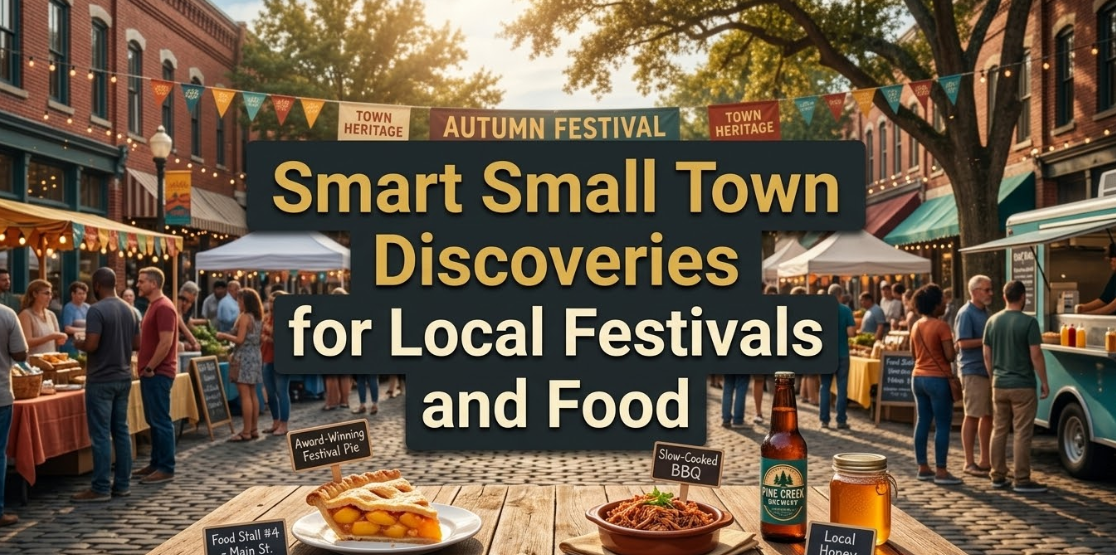
Small towns have a secret. They hide some of the best food, culture and fun in the country. And while major cities get all the buzz, there are pretty amazing local festivals and food experiences that take place in small towns — but most people never discover them.
Think about it. When was the last time you passed through a tiny town and discovered a weekend fair, or an on-the-road pie stand, or streets perfumed with smoked brisket? That feeling is hard to beat.
This guide explains 7 wise small town discoveries to help you travel, eat, and celebrate like a rockstar. These are the tips for making it easier to plan a road trip or fun weekend that will get you going in the right direction.
The Small Town Festival & Food Scene — By the Numbers
10,000+
Annual US festivals in small towns
72%
Local food preferred over chain restaurants
$9B+
Yearly income generated from food festivals across the country
3x
More likely to remember local food experience than a chain meal
Why the Real Food and Festival Goldmines Are Small Towns
Food festivals in big cities are always a blast. But they can be crowded, expensive and a bit too polished. Small towns offer something different. They offer realness.
Local festivals in small towns are organized by neighbors, bakers, farmers and grandmas who have been honing their recipes for generations. The energy is personal. The food is genuine. And the prices tend to be much friendlier to your wallet.
But small town festivals go beyond food, celebrating local history, heritage and pride. You’ll find everything from chili cook-offs and apple butter festivals to bluegrass music fairs and harvest carnivals. Each one has its own story about the people living there.
Quick Tip: The dates when county fairs are held and local event boards are often featured on community Facebook groups or small-town tourism websites, so look before you go.
Discovery 1 — Follow the Farmers Market First
Why the Farmers Market Is Your Best Place to Start
If you’re interested in understanding a small town’s food culture, begin at its farmers market. This is where local growers, bakers and makers show up each week. It is the pulse of the community.
Farmers markets usually take place on Saturday mornings, running spring to fall. They are free to visit, and you can sample before you make a purchase. Talk to the vendors. Ask them what is in season. Ask what local restaurant uses their produce.
These conversations will take you to secret restaurants, pop-up food stalls and yet-to-make-a-tourist-map local festivals.
Discovery 1 — Key Takeaway
Farmers markets are a gateway. They’ll hook you in with local food makers, upcoming events and the real flavors of any small town. Always visit one first.
What to Look For at Farmers Markets
| Item to Look For | Why It Matters | What to Do |
|---|---|---|
| Seasonal produce stands | Showcase what grows best in the region | Buy and sample the local specialty |
| Homemade baked goods | Passed-down family recipes | Ask about the backstory of the recipe |
| Jams, preserves & pickles | Unique flavors that are hard to find elsewhere | Grab a jar for your souvenir |
| Event flyers on community boards | Local festivals, fairs and food happenings | Take every flyer you see |
| Hot food vendors | As good as regional breakfast or lunch gets | Eat there, tip well, and ask where else you can go |
Discovery 2 — Hunt Down the Town’s Signature Dish
There’s Always That One Food in Every Small Town
Just ask a local which food their town is famous for. Each small town has its own signature dish or regional specialty. It could be a pork tenderloin sandwich, a butter cake, a kind of chowder or a style of barbecue.
But these foods are not simply food. They are identity. Finding and eating them is one of the best small town discoveries you can make.
Do not rely on Yelp alone. Ask the gas station clerk. Ask the person at the local diner. Ask the librarian. The locals will take you to the real deal, not the tourist trap.
How to Find the Signature Dish Fast
- Walk into the oldest diner in town and order whatever the daily special happens to be.
- Ask your server: “What’s your favorite thing from the kitchen here?” Most will glow and share everything.
- Search the local newspaper or community website for articles on food history.
- Look for handwritten signs or chalkboard menus — they often signal house specials.
- On social media, search the town name plus “best food” or “must try.”
Fun Fact: The Indiana tenderloin sandwich — a huge, crispy piece of pork served on a small bun — is renowned across the state. Many small Indiana towns have their own version too. Comparing them across towns is its own road trip experience.
Discovery 3 — Align Your Visit with a Local Festival Calendar
Small Town Festivals Run All Year Long
When it comes to festivals, people tend to think summer. They are not. In almost every season, small towns find something to celebrate. From winter chili cook-offs and spring strawberry festivals to fall harvest fairs, there’s always something going on if you know when to find it.
The key is to do your research before you go. With some planning, a standard weekend road trip can become a full cultural experience.
| Season | Common Festival Types | What You’ll Typically Find |
|---|---|---|
| Spring | Strawberry festivals, flower fairs, maple syrup events | Fresh produce, outdoor crafts and live folk music |
| Summer | County fairs, BBQ competitions and fish fries | Rides, livestock shows, smoking pits and pie contests |
| Fall | Harvest festivals, apple butter events and pumpkin fairs | Cider pressing, hayrides, local brews and bonfires |
| Winter | Chili cook-offs, holiday food markets and soup fests | Hot food, warm drinks, handmade crafts and caroling |
Where to Look for Local Festival Listings
Your best resources are county tourism sites, local Facebook groups, community bulletin boards and small-town newspapers. Don’t discount the gas station or the barber shop down the street. These are folks who know what is going on in their own communities.
Pro Tip: Most small town festivals have little to no online presence. Usually just a phone call to the local visitor center or chamber of commerce will uncover events that don’t show up even on Google.
Discovery 4 — Eat Where Locals Eat, Not Where the Best Sign Is
The Best Food Is Never the Most Advertised
In small towns, the best food is almost never found at the place with the largest sign or most elaborate website. More often, they are hidden away in strip malls, nestled into gas stations or contained within a building that looks like nothing from the outside.
The rule is straightforward: follow the locals. If you pull into a parking lot brimming with trucks and older sedans at 11:30 a.m., you’re in the right place.
Locals don’t have time to waste at bad restaurants. They also do not care about Instagram aesthetics. They go where the food is hearty and the portions are honest.
Signs That You’ve Found a Great Local Spot
- The menu is small and handwritten or printed on simple sheets of paper
- The staff knows the regulars by name
- There are no chain restaurant vibes — no standardized décor or packaging
- The specials change depending on what’s fresh or in season
- The prices are shockingly low for the quality
- You hear locals talking to each other across tables
Discovery 4 — Reality Check
A diner that’s been operating since 1962 with a flickering neon sign and mismatched chairs is almost always superior to the “New American Bistro” that opened last year with a pristine logo. Trust the history, not the marketing.
Discovery 5 — Learn About the Food Traditions Behind Festivals
Each Festival Dish Has Its Own Story
Small town festivals are not just about eating. They are about remembering. The food served at these events often connects to immigrant history, agricultural traditions or religious heritage dating back hundreds of years.
A Polish pierogi festival in a Pennsylvania coal town, for example, has ties to the workers who settled there in the 1800s. A Louisiana crawfish boil festival reflects Cajun culture that spans generations. A local church’s Greek food festival carries recipes that crossed the ocean.
When you dig into the food at a local festival, you’re also digging into history. Ask the organizers about the origins of the dishes. Most will be delighted to tell the story.
For a broader look at how American food culture has evolved through community celebrations, the Smithsonian Magazine’s guide to America’s food festivals is a great place to start.
Food Traditions Worth Experiencing at Small Town Festivals
| Food Tradition | Region Where It Thrives | Cultural Connection |
|---|---|---|
| Pierogies | Pennsylvania, Ohio, Midwest | Polish and Eastern European immigrant communities |
| Crawfish boils | Louisiana, Gulf Coast | Cajun and Creole heritage |
| Fry bread | Southwest, Plains states | Native American tribal traditions |
| Apple butter | Appalachia, Mid-Atlantic | Autumn preservation rituals going back centuries |
| Smoked brisket | Texas, Oklahoma | Cattle ranching and Czech-German settlers |
| Funnel cake | Pennsylvania Dutch country | German immigrant fried pastry traditions |
Discovery 6 — Look for Impromptu Food Vendors Off the Main Stage
The Tastiest Bites Are Often Off the Beaten Path
When you walk into a local festival, all the big food stands near the entrance or main stage steal your focus. Lines are long. Prices tend to be higher. And the food is typically more generic.
The real magic unfolds when you venture to the outer edges of the festival grounds. That’s how you find the small church group selling homemade tamales, the local 4-H club frying apple fritters, or an elderly couple with a folding table and a cooler full of whatever they’ve been making for 40 years.
These vendors are often quick to sell out. Arrive early and walk the entire grounds before you settle on your first bite. Search for hand-painted signs or makeshift setups. These are your best bets.
Smart Festival Eating Strategy
- Try to arrive at least 30 minutes before it gets busy, typically late morning or early afternoon.
- Scout the whole festival before buying anything — do a full lap first.
- Seek out vendors with short lines but curious locals clustered nearby.
- Ask a veteran attendee what is at the top of their list. They know the hidden gems.
- Leave room for dessert — small town baking is almost universally outstanding.
Insider Tip: The final hour of a festival is pure gold. Vendors start lowering prices to clear the last of their stock. You can score great savings on handmade preserves, baked goods and hot food items.
Discovery 7 — Engage with the Community, Not Just the Food
The People Are the Best Part of Any Small Town Festival
Food is the entry point. But the small town discoveries we will remember most happen in conversation. Talk to the people around you. Ask the vendor how they learned to cook. Ask a local about the history of the festival. Ask any grandparent sitting in a lawn chair what their favorite memory of this event is.
Small towns are where people actually still know each other. Festivals are community reunions. You’re not a tourist crashing a party — you’re an invited guest, and most locals love to show off what makes their home unique.
How to Be a Respectful Festival Visitor
- Support local vendors instead of the chain food trucks that sometimes appear
- Whenever you can, leave cash — many small vendors don’t like to lose out on card fees
- Pick up after yourself and be respectful of the space
- Stop treating the festival like a photo shoot — live in the moment
- Post what you discover on social media, mentioning the relevant town and occasion
- Return the next year — your repeat visit means a lot to organizers
Discovery 7 — The Bigger Picture
When you pay for an entry to a small town festival and engage meaningfully with locals, you are contributing to the persistence of that community’s culture. Your visit has more impact than you know.
Small Town Festivals vs. Big City Food Events — A Quick Comparison
| Factor | Small Town Festivals | Big City Food Events |
|---|---|---|
| Crowd size | Manageable, laid back | Often very crowded |
| Food authenticity | Very high — homemade traditions | Varies widely |
| Price range | Budget-friendly | Usually expensive |
| Personal connection | High — you meet the makers | Low — vendors are often employees |
| Cultural depth | Deep local roots | Can feel curated or commercial |
| Discovery factor | High — always something new | Familiar, generally predictable |
| Parking and logistics | Easy and free for most | Stressful and expensive |
Planning Your Small Town Festival Road Trip
A Simple Framework to Get Started
You do not have to plan everything beforehand. Leaving room for spontaneity is part of what makes exploring a small town so fulfilling. But a little structure helps.
- Choose a geography or direction you want to explore — mountain, coastal, plains or rural South.
- Look on county and state tourism websites for festival calendars in that area.
- Find two or three anchor towns that have events on your trip dates.
- Leave at least one unplanned day for spontaneous stops based on something you hear along the way.
- Find a small motel or bed-and-breakfast — the owners are excellent local resources.
- Keep an eye on local Facebook groups or community boards for up-to-date tips.
- Bring cash, a cooler for food finds and a notebook to keep track of places you love.
Road Trip Idea: Three of the country’s richest small town festival and food corridors run along the Blue Ridge Parkway, the Ohio River Valley and the Texas Hill Country. Each has dozens of events from spring until fall.
Frequently Asked Questions
What are the best small towns in the US for local food festivals?
Towns such as Luckenbach, TX; Galena, IL; Bardstown, KY; Traverse City, MI and Blowing Rock, NC offer strong food and festival cultures. But the best small town is usually the one nearest to you that you haven’t visited yet. Consult your own state’s tourism website for inspiration.
What time of year is best for small town festivals?
Food and harvest festivals run high in late summer and fall. But every season offers something. Winter chili cook-offs and spring food fairs are equally special. Search local event calendars in your area of interest.
Are small town festivals free to attend?
Many small town festivals are free to enter, so you will only spend money on food and activities. A few larger events do charge a nominal admission fee, typically in the $5–$15 range. Either way, they are far more affordable than big city food events.
How do I find out about small town festivals that are not widely advertised?
Your best resources are local Facebook groups, county fair websites, community bulletin boards, local newspapers and calls to the town’s chamber of commerce or visitor center. Asking locals when you arrive is just as effective.
What should I bring to a small town food festival?
Bring cash, a reusable bag or cooler for food purchases, comfortable walking shoes and an open mind. Sunscreen and a light jacket are helpful for outdoor events. A small notepad for writing down vendor names and recommendations is also a great idea.
Is it safe to eat food from small vendors at local festivals?
Generally, yes. Licensed food vendors at official events are subject to local health department requirements. If you have allergies or dietary restrictions, always check directly with the vendor about ingredients. Food prepared by community groups is usually made with great care.
How does visiting small town festivals help the local economy?
Every dollar that goes to a local festival stays in the community. It sustains the farmer who grew the ingredients, the baker who made the pie and the organizers who keep the tradition going. Choosing a small local event over a large commercial festival is a great way to support real economies.
Wrapping It All Up
There is more wonder in small towns than most people realize. The seven smart small town discoveries in this guide — whether it’s farmers markets, signature dishes, hidden festival vendors or community connections — point to a bigger truth about travel and food.
The best experiences are rarely the most advertised ones. They’re the ones discovered when you slow down, ask questions and are willing to let your nose lead you down a side street or into a parking lot packed with pickup trucks.
Local festivals and food traditions are living history. They carry the flavors, stories and pride of communities that have been building something special for generations. When you show up and participate, you become part of that story.
So pick a direction, find a small town and go hungry. The discoveries are waiting.