Are you bored of doing the same thing every weekend? Big city parks get crowded. Hiking trails are often full. Tourist traps are always best the first time you see them.
Most people are missing the secret: small towns offer some of the best nature adventures in America. They’re close enough for a weekend trip, quiet enough to feel tranquil, and full of hidden gems that don’t appear on travel blogs.
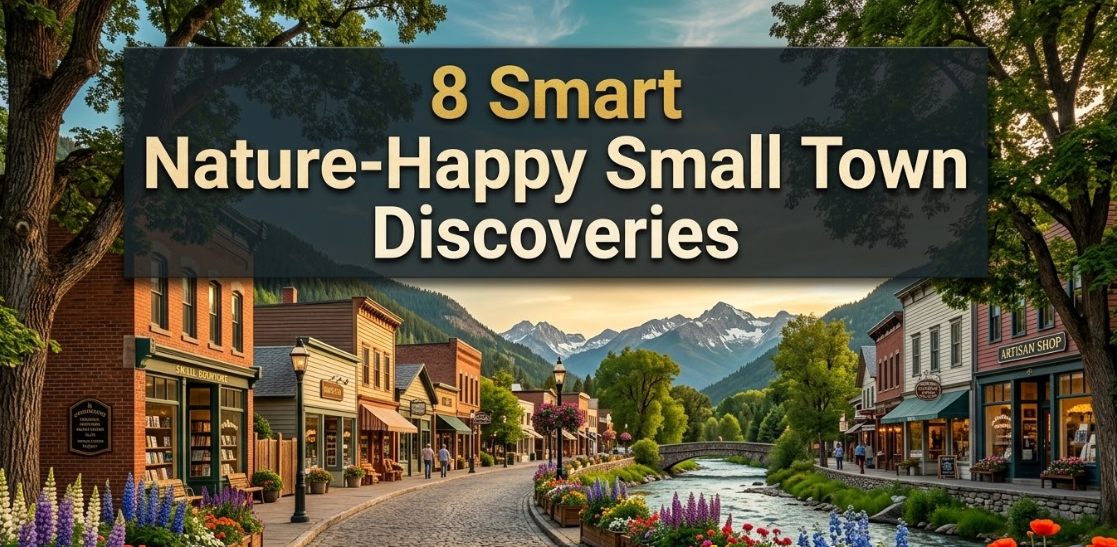
Here are 8 Nature Small Town Discoveries to radically change how you spend your weekend. If you love hiking, stargazing, swimming or simply strolling through wildflower fields, there’s something here for you.
Let’s get into it.
Why Small Towns Are the New Weekend Escape
Big national parks are gorgeous — but they also have traffic, permit systems and parking fees. Small towns flip that script.
When you tour a small town’s natural scenery, you get:
- Fewer people on the trails
- More genuine interactions with locals
- Lower or zero entry costs
- Landscapes that haven’t been over-photographed
And most small towns are just a 1–3 hour drive from any big city. That makes them ideal for a Saturday morning getaway with a Sunday return.
Discovery 1 — The Secret Side Trails Locals Actually Use
Every small town has trails that aren’t on Google Maps. These are the trampled paths forged by generations of neighbors — behind a farmer’s fence, through an old orchard, or along the bank of a creek.
It’s the lesser-known routes that are often the best. They are not managed by a parks department, so they feel raw and real. You’ll walk across wooden planks laid over streams, duck under low branches, and stumble onto breathtaking views.
How to Find Them
The oldest trick in the book when it comes to discovering these trails is simply asking people. Stop at the local diner. Someone at the gas station knows. Say you are hoping for a nice walk and watch their face light up.
Local Facebook groups and county hiking clubs are also great sources. Search “[town name] hiking” and you’ll often find threads packed with insider tips.
Pro tip: Keep an eye out for little trailhead signs along cemetery roads, old railroad beds, or farm access lanes. These are often entry points to trails that aren’t listed anywhere online.
Discovery 2 — Getting Up Early to Visit Pick-Your-Own Farms
There’s something very satisfying about harvesting your own strawberries, blueberries or apples fresh from the source.
Most PYO farms are in small, rural towns and a trip to one is a morning-long activity. You get exercise, fresh air and a box of fruit that tastes better than anything you can find at a grocery store.
What’s In Season When
| Season | Common Crops to Pick |
|---|---|
| Spring | Strawberries, asparagus, peas |
| Summer | Blueberries, peaches, tomatoes, sunflowers |
| Fall | Apples, pumpkins, grapes, winter squash |
| Winter | Christmas trees, some root vegetables |
Most PYO farms bill by the pound or bucket. Costs generally range $5–$20 per person, and children are often free.
Check websites like PickYourOwn.org to search farms by state, crop and season.
Discovery 3 — Swimming Holes Only Locals Know About
Forget overcrowded public beaches. There are sure to be legendary swimming holes near small towns next to rivers, limestone springs or mountain creeks that only locals know about.
These sites tend to be free, peaceful and incredibly beautiful. Think turquoise, crystalline waters, moss-covered rocks and the sound of a waterfall in the distance.
What Makes a Great Swimming Hole
- Clear water — you can see the bottom
- Natural shade — trees overhead help keep things cool
- Relaxed entry points — notably if you’re traveling with children
- Good depth — at least 6–8 feet deep under the jump spots
Always be sure to check local water quality reports before swimming. Seasonal water safety advisories are most often found online from county health departments.
Safety note: Never swim alone. Be sure to check for any submerged rocks before jumping. Water levels fluctuate with rain, so what was safe last summer may not be this year.
Discovery 4 — Farmers Markets That Double as Nature Walks
A good farmers market is about more than food. In small towns, markets are often set up outdoors near parks, riverbeds or historic squares — making them the perfect combination of shopping and light nature exposure.
You’ll encounter local honey, homemade jams, handmade soaps, fresh herbs and frequently live music. It’s a full sensory experience.
What to Look for at a Small Town Market
Aside from the food, look for:
- Native plant stalls — vendors selling wildflowers and pollinator plants for your garden
- Local nature books — sometimes by local authors
- Community boards — usually set up near the entrances with information about local hikes, cleanups or birding walks
Markets usually operate Saturday mornings from 7am through noon. Some towns hold them on Sundays, or even Wednesday afternoons.
Discovery 5 — Birding Routes With No Gear Necessary
Birdwatching has seen a huge jump in popularity over the past few years — and small towns adjacent to wetlands, forests or open meadows are ideal birding territory.
You don’t need a fancy pair of binoculars or even a field guide to begin. A free app such as Merlin Bird ID (by Cornell Lab) can identify a bird by its song or photo in seconds.
Top Habitats to Explore
Different birds appear in different habitats. Here’s a quick cheat sheet:
| Habitat Type | Birds You Might See |
|---|---|
| Wetlands/ponds | Herons, egrets, red-winged blackbirds |
| Forest edges | Warblers, woodpeckers, thrushes |
| Open meadows | Eastern bluebirds, kestrels, bobolinks |
| Riverbanks | Kingfishers, ducks, sandpipers |
| Farmland | Barn swallows, owls, sparrows |
The best time is early morning. Birds are most active in the first two hours after sunrise. Bring water, take your time, and listen more than you watch.
Bonus: Small towns along major flyways often host spring and fall birding festivals. These are great community events that include free guided walks.
Discovery 6 — Stargazing Spots That Will Actually Surprise You
Light pollution ruins the night sky for most urban and suburban residents. But just 45 minutes out of town into the country, and the sky changes altogether.
Small towns in rural areas — particularly those located among farmland or national forest — are often found within so-called dark sky zones. On a clear night, thousands of stars, the Milky Way and meteor showers can be seen with your naked eye.
Planning Your Stargazing Night
Use these free tools to plan:
- Light Pollution Map (lightpollutionmap.info) — shows dark sky areas near you
- Clear Outside app — cloud cover forecast for your precise location
- TimeandDate.com — gives times for moonrise/moonset (avoid full moon nights)
Ideal conditions include low humidity on a new moon night. Get there before sunset, give your eyes at least 20 minutes to adjust, and don’t look at your phone screen.
Some small towns near dark sky preserves offer free telescope nights hosted by local astronomy societies. They’re free, family-friendly and totally unforgettable.
Discovery 7 — Historic Covered Bridges Along Scenic Waterways
Covered bridges are one of those things you don’t expect to be magical — until you actually stand in one.
Built mostly in the 1800s, covered bridges were created to protect the wooden floor from rain and snow. Many of them remain in small agricultural towns, sometimes nestled along quiet rivers or forest roads.
Why They’re Worth the Drive
A covered bridge visit is a mix of history, architecture and pure natural beauty. Most are surrounded by:
- Shallow, walkable streams
- Picnic areas or fishing spots
- Wildflower patches along the banks
- Nearby ruins such as old mills or stone walls
Indiana, Vermont, Oregon and Ohio have some of the highest concentrations of covered bridges in the US. Many counties issue free self-guided covered bridge driving tour maps — a perfect way to spend a half-day exploring.
If you want to plan more getaways like this, Small Town Discoveries is a great resource for finding hidden gems, scenic drives and weekend adventure ideas across small-town America.
What to Do at a Covered Bridge
- Take a slow stroll through it (the acoustics are amazing)
- Keep an eye out for the year it was built, carved or painted over the entrance
- Walk the creek banks on both sides
- Look for herons, kingfishers or turtles in the water below
- Pack a picnic to eat on the grassy banks
These spots rarely have crowds. Most drivers pass by without stopping. That’s your advantage.
Discovery 8 — Wildflower Meadows That Peak in Surprising Seasons
People typically associate wildflowers with spring. But wildflower blooms in small towns across different regions occur in waves all year long.
Spring brings bluebells and trilliums. Summer brings sunflowers, black-eyed Susans and Queen Anne’s lace. Fall brings goldenrod and asters. Even winter has witch hazel blooming in some areas.
Where to Find Them
Wildflower meadows tend to flourish in particular conditions:
| Location Type | Common Wildflowers Found |
|---|---|
| Roadsides and ditches | Chicory, daisies, clover |
| Old fields / abandoned farms | Goldenrod, milkweed, thistle |
| Forest edges | Trillium, bloodroot, wild ginger |
| Wet meadows | Joe-pye weed, ironweed, swamp rose |
| Prairie remnants | Purple coneflower, wild bergamot |
Apps such as iNaturalist are great tools for identifying wildflowers on the go. Snap a photo, find out the name, and learn which pollinators depend on each plant. It transforms a routine walk into a science class.
Photography tip: Shoot during the golden hour — just after sunrise or just before sunset. Floral colors pop in the lower-angled light, and long, soft shadows are cast.
How to Plan a Perfect Nature Small Town Weekend
Now that you know what to keep an eye out for, here’s how to plan a full weekend around these discoveries.
Day 1 — Saturday
- Morning (7–10am): Visit a farmers market or PYO farm
- Late morning (10am–noon): Head out for a hidden trail hike or birding route
- Afternoon (1–4pm): Swimming hole or wildflower meadow exploration
- Evening: Dinner at a local diner, then drive to your stargazing spot
Day 2 — Sunday
- Morning: Scenic drive over covered bridges, picnic at a creek-side spot
- Late morning: Second trail or farm stand
- Early afternoon: Head home before the traffic
This schedule keeps costs minimal. Most of these activities are completely free. Budget $30–$50 for food and perhaps a PYO farm purchase, and you’ve got yourself one fulfilled weekend.
Quick Comparison: Small Town vs. Big Park Experience
| Factor | Small Town Nature | National/State Park |
|---|---|---|
| Crowd level | Low to none | Moderate to very high |
| Entry cost | Generally free | $10–$35 per vehicle |
| Permits required | Rarely | Often necessary |
| Parking | Easy | Can be a long walk |
| Local food options | Plenty | Limited |
| Sense of discovery | High | Lower (well-mapped) |
| Kid-friendliness | Very high | Moderate |
| Cell signal | Mixed | Often none |
Small towns win on nearly every practical consideration. What big parks offer that small towns don’t is maintained infrastructure — bathrooms, marked trails, rangers on duty. Just keep that in mind when planning with very young children or first-time hikers.
Tips to Get the Most Out of Your Small Town Nature Trip
A little preparation goes a long way. Here’s what you need to know before you go.
Before You Leave
- Check the weather for both Saturday and Sunday mornings
- Download offline maps (Maps.me or Google Maps offline)
- Bring reusable water bottles — there’s often no store in small towns along rural routes
- Bring cash — many farm stands and markets don’t accept cards
While You’re There
- If hiking alone, inform someone of your destination
- Grab a local newspaper or check out the community bulletin board for surprise events
- Talk to locals — they’ll tell you things no app ever will
- Follow the rule of leaving things as you found them
What to Wear and Bring
- Comfortable closed-toe shoes (no sandals for trail hikes)
- Layers — rural morning and evening temps can be chilly
- A basic first aid kit
- Sunscreen and bug spray
- A light backpack with snacks and a jacket
FAQs About Nature Small Town Weekend Adventures
Q: What’s my drive radius for a good small town nature spot? For most people, driving 60–90 minutes to a small town with at least 2–3 of these discoveries should be possible. Search for “small towns near nature [your state]” and you may be surprised by how many options come up.
Q: Are these activities safe for young families? Many of these are perfect for kids. Farmers markets, wildflower meadows, covered bridges and birding routes are all very family-friendly. For swimming holes, always check for water safety and never allow children to swim unsupervised.
Q: Should I make any reservations ahead of time? Usually no. Most of these are walk-in activities. The only potential exceptions are busy PYO farms at peak weekends — a two-minute phone call guarantees you will get in.
Q: When is the best time for small town nature trips? Spring and fall are usually best. Spring brings wildflowers and birding migration. Fall has harvest activities, foliage and diminished heat. Summer is a great time for swimming holes. Winter is also a fine time for stargazing, because the skies tend to be clearer.
Q: Can I do these trips solo? Absolutely. Many solo travelers choose small towns for their slow-paced, friendly atmosphere. Just follow the same basic rules of safety — tell someone about your plans, stick to well-known trail routes if hiking alone, and keep your phone charged.
Q: Are any of these discoveries free? Most of them are. Hidden trails, stargazing spots, wildflower meadows, birding routes and covered bridge visits are all free. Farmers markets and PYO farms have small costs, but nothing that will dent your budget.
Q: How do I find swimming holes that Google Maps doesn’t show? Inquire at local bait shops, outdoor gear stores or town Facebook groups. Search “[county name] swimming hole” on Reddit’s outdoor or regional boards. Talk to anybody who looks like they spend time outdoors in that town.
Q: What apps are most helpful for these trips? Merlin Bird ID for birding, iNaturalist for wildflower and wildlife identification, AllTrails for trail information, Light Pollution Map for stargazing planning and PickYourOwn.org for farm locations.
Wrapping It All Up
Nature small town discoveries don’t need big budgets, long vacations or elaborate planning. All they need is the curiosity to look beyond the obvious.
Hidden trails, local farms, swimming holes, farmers markets, birding routes, stargazing spots, covered bridges and wildflower meadows — these eight discoveries await just outside every major city in America.
You don’t need to pay for a hotel room. You don’t need a national park pass. You don’t have to battle traffic or apply for permits three months in advance.
You just need a free Saturday morning, a full water bottle and the willingness to ask a local where the good stuff is.
Start small. Choose one town within an hour of home. Find one trail or one farm. See what you discover. You can bet that by the time you slip back into your car, you’ll be plotting your next trip.