Stress tends to accumulate quickly.
Work deadlines. Phone notifications. The backed-up sounds of a living city that never actually ends. Sometimes the best thing you can do for yourself is vanish for a weekend — not to another overcrowded tourist trap, but to somewhere less traveled. Somewhere, anyplace, that lets you breathe.
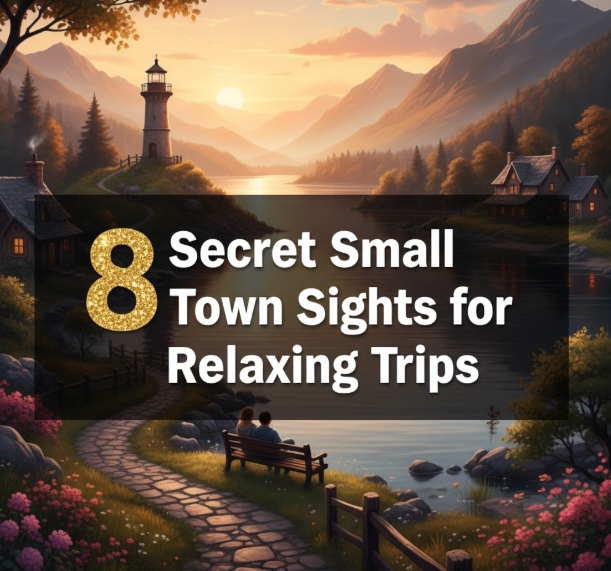
And that’s exactly what these 8 hidden small town weekend finds provide.
These are towns that most people have never heard of. Places where the coffee shop knows your order by Sunday morning. Where you can stroll for an hour without passing a single souvenir shop. Land where the day’s biggest decision was which trail to hike or whose porch to sit on.
If a bona fide relaxing trip is what you could use, read on.
1. Salida, Colo. — A Mountain Town That Paces Your Speed
Population: About 6,000 | Distance From Denver: Two and a half hours southwest
Cradled by the Collegiate Peaks — a 14,000-foot line of mountains that comprise one of Colorado’s most dramatic backdrops — Salida sits at more than 7,000 feet elevation.
But Salida is more than a scenic destination. It’s the pace.
Some Hot Springs, Cold Rivers and No Rushing
The Arkansas River runs right through town. It is one of the finest whitewater rivers in the country, but even if you never pick up a paddle, the river remains a consistent, soothing presence.
The Salida Hot Springs Aquatic Center features the largest indoor hot springs pool in Colorado. There is nothing as restorative after a day of hiking than lowering yourself into warm, mineral-rich water with snow-capped peaks in the distance.
The nearby Monarch Crest Trail is legendary among mountain bikers and hikers. From the ridge, you can see four mountain ranges on a clear morning.
The Art World No One Told You About
Salida has a softly thriving arts community. The downtown area — known locally as “SteamPlant” — is full of galleries, studios and handmade-goods stores.
The Salida SteamPlant Event Center is located in a beautifully restored 1887 steam heating plant. It stages live music, art exhibitions and theater performances year round.
Restaurants here hit well above the size of the town. Amicas features wood-fired pizza that locals consider a local institution. Il Vicino steps up the Italian flavor with a proper craft brewery attached.
Best for: Couples, solo travelers and anyone emerging from burnout. The town asks nothing of you.
2. Beaufort, N.C. — Where the South Slows Down
Population: About 4,000 | Distance from Raleigh: 2.5 hours southeast
Beaufort (pronounced BOH-fert, not BYOO-fert — locals will graciously correct you) is one of North Carolina’s oldest towns, and one of its most effortlessly beautiful.
It is located on the Crystal Coast, on a barrier island between the Atlantic Ocean and the Back Sound. The water is everywhere.
Shackleford Banks’ Wild Horses
Only a short ferry ride from the Beaufort waterfront lies Shackleford Banks — a barrier island without roads, buildings or inhabitants other than day visitors.
What it has is wild horses.
Hundreds of colonial Spanish mustangs graze freely on the island, descendants of horses brought to the Americas by Spanish explorers in the 1500s. Watching them graze along the dunes, entirely unbothered, is one of those truly rare wildlife experiences.
The ferry ride takes approximately 20 minutes each way. There’s nothing to buy or do on the island except walk and gawk. That’s the point.
Historic Beaufort and the Waterfront
The Beaufort Historic Site is a strollable grouping of 18th and 19th-century buildings — an old jail, a courthouse, an apothecary shop. The self-guided tours are truly engrossing.
The waterfront boardwalk is a lovely spot for an evening stroll. The Spouter Inn — which has a front-row view of the water — dishes up some of the finest she-crab soup anywhere on the Carolina coast. It’s the sort of meal that makes you want to stay an extra night.
Don’t miss: The North Carolina Maritime Museum. It holds artifacts from Blackbeard’s flagship, the Queen Anne’s Revenge, which were retrieved from the sea floor nearby. Fascinating and free.
3. Paia, Hawaii — The Pacific’s Most Bohemian Small Town
Population: About 2,700 | Location: North Shore of Maui
Most visitors to Maui don’t venture far from Kaanapali or Wailea — both lovely, but they’re resort areas, not real places.
Paia is a real place.
Surfboards, Smoothie Bowls and Rainbow Eucalyptus Trees
The Road to Hana begins at Paia. Most people use it as just a starting point. But the town of Paia merits a full day — or two.
The town center is a few blocks of surf shops, yoga studios, farm-to-table restaurants and art galleries. The feel is equal parts old plantation town and current bohemian village.
On the outskirts of town, Baldwin Beach is one of Maui’s more beautiful, less-crowded beaches. On any given day, you’ll have it with a handful of locals and an occasional monk seal snoozing in the shade.
Hookipa Beach Park, just down the road, is world-renowned among windsurfers and kiteboarders. Even if you never step in the water, it’s genuinely exhilarating to see the pros zip over the whitecaps.
The Food Scene Exceeds All Expectations
Charley’s Restaurant is an institution in Paia, dating back to 1969. Willie Nelson used to perform there. Breakfasts are enormous and unhurried.
Just east of town, Mama’s Fish House is consistently one of the best restaurants in all of Hawaii. The menu changes daily — whatever local fishermen deliver that morning. Reservations fill up weeks ahead — price of the effort, all worth it.
Pro tip: Stay in a rental in Paia or nearby Haiku instead of the resort corridor. You’ll wake up to roosters and plumeria and real island life.
4. Abiquiu, New Mexico — Desert Stillness, Sky and Georgia O’Keeffe’s Ghost
Population: ~230 | Distance from Santa Fe: 1 hour north
Abiquiu hardly counts as a town. It’s more like a presence — a stretch of high desert canyon country so visually beautiful, one of America’s foremost artists made it her forever home.
Georgia O’Keeffe lived here and painted in it for nearly five decades. To stand in this landscape is to grasp immediately why.
The Colors of Ghost Ranch
Ghost Ranch lies just a few miles north of Abiquiu, and it really is one of the most stunning spots in America.
The cliffs range from deep red to orange to purple, depending on the hour. In the late afternoon, sunlight gilds everything. There are hiking trails throughout the property, as well as two small museums — one on anthropology and another on paleontology (actual dinosaur fossils have been excavated from these rocks).
The Georgia O’Keeffe Home and Studio in Abiquiu itself offers limited tours — advance reservations are a must as those time slots fill up fast. But even driving past and seeing her painted landscape makes a connection that is difficult to put into words.
The Quiet That Heals You
There’s very little to do in Abiquiu. No nightlife. No crowded restaurants. No gift shops.
What there is: total silence, stars so thick they seem painted, sunsets that take an hour and never repeat themselves.
Abiquiu Lake Recreation Area has kayaking, fishing and camping. You can have entire stretches of shoreline to yourself on a weekday.
Best for: Those who need to go completely off-grid. This is where the screens feel truly irrelevant.
5. Apalachicola, Fla. — An Oyster Town That Time Forgot
Population: About 2,400 | Distance from Tallahassee: 1.5 hours southwest
There are a lot of beach towns in Florida. They are mostly loud, crowded and designed for maximum commercial throughput.
Apalachicola is none of those things.
It is located on the Florida Panhandle, where the Apalachicola River drains into the Gulf of Mexico. This bay produces about 90 percent of Florida’s oysters — a fact the whole town is quietly proud of.
The Oysters Are the Point
And what oysters they are.
Apalachicola Bay is one of the few remaining truly wild oyster harvests in the eastern United States. The brackish bay environment — produced by the interplay between fresh river water and salt water — creates oysters with a flavor unlike farmed ones.
Locals will tell you to eat them raw, with nothing more than a squeeze of lemon. They’re right.
Papa Joe’s Oyster Bar is right on the waterfront. It’s not fancy. The plastic chairs wobble. The oysters come by the dozen, freshly shucked, and they’re amazing.
Walking the Quiet Streets
Apalachicola’s historic district is small but atmospheric. Gabled Victorian homes with generous porches front the shaded lanes. Magnolias hang over the sidewalks. Almost nothing is chain-owned.
The Apalachicola National Estuarine Research Reserve, which protects coastal estuaries and wetlands, offers guided kayak tours through old-growth cypress and tupelo forest. Paddling in near silence through ancient trees is an experience unto itself.
What not to miss: Stay in the historic core, and Apalachicola feels like another century.
6. Eureka Springs, Ark. — A Victorian Town Built Into a Hillside
Population: About 2,100 | Distance from Fayetteville: One hour east
Eureka Springs defies every principle of small-town geography.
There’s no flat ground. The entire town is carved into the steep hillsides of the Ozark Mountains, so that streets twist and switchback, staircases connect neighborhoods and every building’s elevation differs from its neighbor.
It’s one of the more unusual, instantly appealing streetscapes in America.
The Wellsprings That Launched It All
From the 1880s, visitors traveled from around the nation to soak in Eureka Springs’ mineral springs, thought to have health benefits. Hotels, bathhouses and sanitariums went up at breakneck speed. The town was transformed into a resort destination for the whole region.
The springs are still flowing all across town. In all, 63 springs have names — water oozes from hillsides, flows through stone basins and trickles under roads. It helps create a slightly otherworldly sense, as if the town had been built around something living.
Basin Spring, located in the heart of town, is free and surrounded by a well-groomed park.
Arts, Wellness and Winding Streets
Eureka Springs has quietly evolved into a haven for artists, wellness retreats and indie hotels. Basin Park Hotel, constructed in 1905, has seven stories — all of which have street-level access thanks to the hilly topography. Each floor opens onto a different street. That’s not a typo.
The Crescent Hotel, constructed in 1886 at the top of the ridge, conducts tours that feature a truly fascinating history of its years as a fraudulent cancer hospital during the 1930s. Whether you believe in ghosts or not, the storytelling is superb.
Independent restaurants, spa studios and art galleries line the downtown area around every curve.
Best season to go: Spring, when the dogwoods and redbuds blossom throughout the Ozarks. The hillsides burst into pink and white, and the air is fragrant with rain and flowers.
7. Winthrop, Wash. — The Old West Town That Takes Hiking Seriously
Population: Approximately 400 | Distance from Seattle: Three hours east
Winthrop is technically a frontier-themed town, but unlike Leavenworth’s Bavarian facelift, Winthrop’s Western vibe is a natural match for its topography.
The town is located in the Methow Valley, east of the North Cascades. In every direction, pine-covered ridges loom. The Methow River flows cold and clear across the valley floor. It’s a painting on a summer morning, the mountains backlit by early light.
The Methow Valley Trail System
The actual reason to visit Winthrop is the trails.
The Methow Valley trail system is the largest non-motorized trail network in the Pacific Northwest — more than 200 miles of connected trails that crisscross sagebrush flats, pine forests and alpine meadows. In summer, the trail network is used by hikers and mountain bikers. In winter, it becomes one of the top cross-country skiing destinations in the country.
Sun Mountain Lodge, perched high on a ridge overlooking Winthrop, has sweeping views across the entire valley. Even if you don’t stay there, it’s worth driving up for dinner or a drink on the terrace.
The Town Itself
The boardwalk main street in Winthrop features wooden storefronts, old-fashioned signage and a pronounced absence of chain stores.
Since 1988, Sheri’s Sweet Shoppe has been hand-crafting ice cream and candy. The Barn has live music on summer weekends. The Duck Brand Hotel, dating to the early 1900s, is one of Washington’s most atmospheric places to stay.
What nobody tells you: The Methow Valley has some of Washington state’s clearest skies. If you come in late summer, when smoke from distant wildfires isn’t blowing in, the stargazing is remarkable.
8. Lewisburg, W.Va. — The Hidden Gem of the Greenbrier Valley
Population: About 4,000 | Distance from Charleston: 1½ hours southeast
Lewisburg makes no effort at impressiveness. That’s probably why it is impressive.
It was listed as one of the “Coolest Small Towns in America” by Budget Travel magazine, a tribute that surprised even some locals. They knew what they had — they just weren’t expecting everyone else to pay attention.
Carnegie Hall and the Literary Calendar
Carnegie Hall in Lewisburg is not the Carnegie Hall in New York. It’s a nicely restored 1902 building that acts as a true community arts center — there are concerts, art exhibits and drama performances every year.
Each spring, the town also hosts the Lewisburg Literary Festival, which attracts writers and readers from near and far. It’s a small festival by design. The events are intimate, talks flow easily, and the whole thing is a gathering of people who genuinely love books.
The Greenbrier and the Lost World
The famed Greenbrier resort is around 10 miles away in White Sulphur Springs. It’s vast and pricey — but it offers day passes for the grounds and spa that make it attainable even for budget-minded visitors.
More interesting, perhaps, is what’s below it. The Greenbrier Bunker was built during the Cold War as an emergency haven for the entire U.S. Congress — a secret kept for 35 years. Now it’s open for tours, and the history is truly mind-bending.
In Lewisburg, the Lost World Caverns are open year-round for guided tours. The cave system is home to massive flowstone formations, underground pools and passages that give the impression you’ve fallen onto another planet.
The food scene: Lewisburg punches well above its weight. The Food Factory has long served as a local cornerstone. The Dirty Bee Honey Bar is unlike anything in the region — a honey-focused taproom and café that attracts visitors from surrounding counties just to say they’ve been there.
What Makes a Small Town Truly Relaxing
Not every tiny community lives up to the promise of rest. There are a few things that can make the difference.
Size Matters — Just Not How You Imagine
Towns on this list are all fewer than 10,000 people. But size alone isn’t enough. What’s more important is the ratio of interesting things to stressful things.
A small town with a couple of good restaurants, one good bookshop, access to nature and nothing much else to feel pressured about is more relaxing than a bigger town with a packed agenda that requires constant decision-making.
The Hotel Question
Chain hotels exist for predictability. But predictability is not what you want when you’re trying to reset.
Every town on this list has locally owned places to stay worth hunting down — whether they’re historic inns, a renovated farmhouse rental or an idiosyncratic B&B run by a former chef who makes breakfast from scratch.
Booking local isn’t just better for the community. It’s almost always a more interesting experience.
Leave Some Hours Empty
The biggest travel mistake people make on relaxing trips is booking every hour.
Plan one anchor activity per day — a morning hike, an afternoon paddle, a long dinner. Leave the rest open. The absolute best moments on a trip like this invariably spring from the impromptu.
Your Weekend Escape Planning Cheat Sheet
| Town | State | Main Draw | Drive from Nearest City | Best For |
|---|---|---|---|---|
| Salida | CO | Hot springs, mountains | Denver (2.5 hrs) | Burnout recovery |
| Beaufort | NC | Wild horses, waterfront | Raleigh (2.5 hrs) | Couples |
| Paia | HI | Surf culture, great food | Kahului (20 min) | Beach + food lovers |
| Abiquiu | NM | Desert silence, art | Santa Fe (1 hr) | Total unplugging |
| Apalachicola | FL | Oysters, Gulf waterfront | Tallahassee (1.5 hrs) | Slow food devotees |
| Eureka Springs | AR | Victorian hillside streets | Fayetteville (1 hr) | Arts + wellness |
| Winthrop | WA | Trail network, scenery | Seattle (3 hrs) | Hikers + skiers |
| Lewisburg | WV | Caves, culture, quiet | Charleston (1.5 hrs) | Slow travel fans |
Secret Weekend Small Town Discoveries FAQ
Q: How can I tell if a small town is genuinely relaxing or just marketed that way? A: Look for a few signals. Are there more locally owned businesses than chain stores? Are the reviews discussing the experience of being there, rather than purely the attractions? Is there natural access — trails, water, open landscape — nearby? Those are the signs.
Q: What’s the best season for weekend trips to small towns? A: It varies from town to town, but there are almost universal sweet spots known as shoulder seasons — late spring and early fall. The weather is nice, the crowds are less intense and lodging prices fall significantly compared with peak summer.
Q: What should I expect to spend for a two-night small town weekend? A: A realistic budget for a comfortable two-night stay — lodging at a local inn, meals at good restaurants and a paid activity or two — falls in the range of $300 to $600 per person. That’s far less than a similarly sized city weekend.
Q: Are these towns appropriate for older travelers or those with limited mobility? A: Most of them, yes, with caveats. Beaufort, Apalachicola and Lewisburg are all very flat and walkable. Eureka Springs has steep grades and stairs that can be difficult. Salida and Winthrop have walkable town centers but you’ll want a vehicle for the best experience.
Q: My time is limited — is it still worth visiting one of these towns? A: Coming Friday evening and leaving Sunday afternoon gives you two full days and a sense of having settled into the place. That settled feeling is exactly where the relaxation begins.
Q: Can I take my dog to these towns? A: Some of these towns are exceedingly dog-friendly. Salida and Winthrop are particularly welcoming, with pet-friendly trails and lodging. Individual accommodations and trail rules should always be checked in advance.
Q: I don’t like hiking or outdoor activities. Which towns are right for me? A: Beaufort, Apalachicola and Eureka Springs are your best bets. All three are rich in cultural, culinary and historical experiences that don’t require putting on a pair of trail shoes.
Q: Where can I discover even more hidden small town weekend getaways beyond this list? A: Small Town Discoveries is a great place to start your search. The National Trust for Historic Preservation also issues annual “Dozen Distinctive Destinations” lists that reliably surface truly under-visited places. Reddit communities including r/camping and r/roadtrip also produce excellent word-of-mouth recommendations.
The Thing About Really Relaxing Trips
Here’s something worth saying plainly.
Nothing on the itinerary guarantees a relaxing trip. It occurs because of what’s not present.
Not there: a city’s ongoing din. Not there: the mandate to capture everything on the list. Not there: the lurking stress of being somewhere that won’t relent.
That’s the commonality in these 8 secret weekend small town discoveries. Each of them is a place where the default setting is rest. Where nature or history or community sets the pace — not commerce.
That’s a weekend you don’t have to earn. Just find the right town and show up.